

|
TL;DR To reach Gen Z on Instagram and YouTube, churches must shift from polished perfection to authentic, relatable content that puts people over algorithms. 1. Think “audience” not “algorithm”—content that resonates will be seen. 2. Authentic, “messy” videos beat overproduced ones. 3. Focus efforts on YouTube for maximum long-term impact. 4. Build lean digital teams and encourage pastors to develop personal platforms. |
Episode Summary:
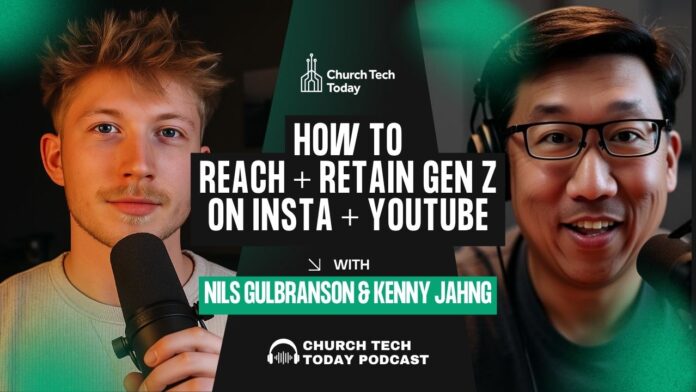
In this episode, Kenny Jahng sits down with Nils Gulbranson, a digitally native Christian content creator, to explore how to make biblical teaching both accessible and engaging on digital platforms. Nils shares the strategies behind his rapid growth to nearly 100K followers and millions of views, plus actionable advice for churches looking to connect with younger audiences online. Listeners will discover practical steps for building an authentic digital presence, choosing the right platforms, and crafting content that resonates with today’s digitally native generation. Whether you’re a pastor or a church communicator, you’ll come away with new ideas to amplify your ministry’s voice online.
In This Episode, You’ll Learn:
How Nils identified a gap between traditional biblical scholarship and Gen Z’s content consumption—and why he stepped in to bridge it
Why reframing your view from “algorithm” to “audience” transforms your approach to social media strategy
The most common mistakes churches make in their digital outreach—and what to stop doing right now
Why authenticity and “messy” realness outperform overly polished, perfection-driven content for younger audiences
Which digital platform holds the greatest potential for churches today, and where to focus your limited resources for maximum impact
How to assemble a lean, effective digital ministry team—even when resources are limited
The case for pastors building a personal online platform alongside the church’s official accounts
Key Quotes:
“Algorithm and audience is synonymous. If the algorithm doesn’t like your video, it means that your audience doesn’t like your video.” — Nils Gulbranson
“Stop trying to make everything look perfect…we crave authenticity.” — Nils Gulbranson
“If you are going to take resources and focus on one platform, it’s YouTube.” — Nils Gulbranson
“Version One is better than Version None. Just get it out the door.” — Kenny Jahng
“Our source of creativity comes from God… Christians should be the forefront of excellence when it comes to all domains of life.” — Nils Gulbranson
Links & Resources Mentioned:
Instagram: @nilsglen (Nils Gulbranson’s primary platform)
YouTube: @NilsGlen
LinkedIn: Connect with Nils Gulbranson
Email: Nil’s [lastname].[firstname]@gmail
Church Tech Today: www.churchtechtoday.com
FrontDoor.church: www.frontdoor.church
About the Church Tech Today Podcast:
The Church Tech Today Podcast helps pastors, church staff, and ministry leaders navigate the intersection of faith and technology with confidence. Hosted by Kenny Jahng and brought to you by www.MinistryLink.com
EPISODE TRANSCRIPT
Kenny Jahng [00:00:02]:
Hey friends, it’s that time again. Kenny Jhang here from Church Tech today and we are here with another episode where we’re sitting down with someone I call digitally native. And I think it’s going to be interesting conversation. Most pastors, most people that are watching here today don’t have the opportunities that I’ve been fortunate enough to have with someone like our friend here. Nils. Nils Gabrinsen. How are you doing? Welcome to the show.
Nils Gulbranson [00:00:27]:
Thank you for having me, Kenny.
Kenny Jahng [00:00:30]:
So let’s get right off the bat, share what your ministry is, what’s your current focus and give everyone some context of why I’m bringing you here into the conversation seat today.
Nils Gulbranson [00:00:44]:
That’s a very good question. I would say just like the ministry or honestly I won’t even call it a ministry, but the stuff that I do is I just make videos about interesting things that I find in the Bible. Essentially I saw a huge gap in biblical scholarship and interesting things that a lot of old guys in front of whiteboards were talking about that no one was viewing. And then a huge gap of that knowledge not being facilitated to maybe younger demographic. So I’m interested in theology, I’m interested in biblical scholarship and creative that world. But I saw that there’s a ton of old guys who were really smart that no one was watching. So I was just like, okay, how do I facilitate this kind of information down to people my age? You know, I’m 25 years old, especially like the, the Gen Z age to see because there’s so much nuggets of wisdom that no one my age is going to be reading an 18 page scholarly paper on a Greek, some obscure Greek word that, that, that Paul wrote in, in Philippians 2. Right.
Nils Gulbranson [00:01:38]:
So I’m like, how can I take interesting topics like that that really make the Bible come to life and just teach younger, the younger generation that the Bible is honestly really cool if you start to. It’s not just like this book. That’s yes, it’s all about love and all these different types of things, but there’s so much more to it. So that’s sort of the niche that I found myself, that I found myself in. Started in short form, content, sort of taken inspiration from people like the Bible project and creating cool animations and just explaining things, explaining hard and challenging topics in under 90 seconds, which is a skill that I’ve learned to develop. It was not always like that. If you go and watch my earlier videos, I was, you know, I really had no idea what the heck I was doing. But at least I was trying and then now very recently I’m converting a little bit, focusing less on short form and more on long form on YouTube to cover these same topics, but in greater detail that hopefully younger people like.
Kenny Jahng [00:02:33]:
And, and what’s your, what’s your native platform? What’s the number one, your primary platform that you’re on today?
Nils Gulbranson [00:02:38]:
My primary platform is Instagram. I have about 85000 followers on there and have been creating content for a little, I think it’s been about a year and a half, maybe, maybe, maybe at the most. And YouTube is my secondary platform. So I initially I was about like 80% Instagram, 20% other platforms just because that’s where I found the most success. Like my stuff didn’t really do that well on TikTok. And I just from candidly speaking, I don’t really like TikTok. And then the other percent was focused on YouTube. I’ve completely flipped that to be 90% YouTube, 10% Instagram.
Nils Gulbranson [00:03:13]:
So I’m still making short form videos when I feel creative and when I want to. For example, today in the gym I was listening to epic movie scores and I could just envision what the next real is going to be. In fact, my most recent video that has, you know, close to 600,000 views, it came from me being in the gym two days ago, listening to, listening to a movie score, then envisioning it. So but now I’m starting a little bit more on YouTube because Instagram doesn’t pay me a dime and I just love the YouTube platform. I love the strategy. I love, you know, all those different types of things. Kenny. So I love it.
Kenny Jahng [00:03:45]:
And so on Insta, I think you are Nils Glenn. Is that what it is?
Nils Gulbranson [00:03:48]:
Nils Glen. Yep. So all my, all my platforms are my first name and middle name. So not Nils Galbrinson, it’s Nils Glen.
Kenny Jahng [00:03:54]:
Okay, perfect. And everybody, you should abandon this podcast and go subscribe. Follow his channels right now and check out some of the videos. And a side note, the overlap in topic here with church tech today is that you are using AI to generate a bunch of stuff.
Nils Gulbranson [00:04:10]:
Oh yeah.
Kenny Jahng [00:04:10]:
We need to have you back to talk specifically about AI, but today I want to focus just on some of the bigger picture questions. And again, I feel like this is one of the things where we have an opportunity to sit down with someone like you who is digitally native, who is getting traction. Like, I mean within less than 2 years you’re pretty much at 100k followers and millions of views, I think. Right.
Nils Gulbranson [00:04:32]:
And so, yeah, yep.
Kenny Jahng [00:04:33]:
And so this is something that is within reach of every. Everybody actually listening to this podcast right now. And I would say I’ll lead with this question, Nils, is if you look at the behaviors of the audiences out there on all these platforms, which is the public, Right. What are we typically misreading? Like, what should we be paying closer attention to instead of the red herrings that we continuously look at metrics and all these things that we’re chasing? I’ll put one out there, I think, on my side. I think a lot of people are still saying, we need that viral video. We need that one viral video. It’s going to change our church’s life. And I don’t think that’s the answer.
Kenny Jahng [00:05:16]:
So I would love your opinion on that. And what else are we misreading? What should we pay closer attention to?
Nils Gulbranson [00:05:21]:
Yeah, I think one of the biggest things that we tend to do is always approach it from a. Like, we’re very data driven when it comes to social media, different platforms. And it’s one thing to be data driven, and it’s another thing to be so obsessive about it that we kind of lose the idea behind why we’re making content in, in the first place. Like, when I first started, when I gave myself that, like, 30 days of uploading every day, I could care less about how many views anything got. My mindset was, if one person sees these videos and accepts Christ or, you know, at least becomes more interested in the Bible and what it has to say. That to me was the metric that I was tracking on all the followers and all the views. That stuff came as a byproduct of why I was doing, doing what I was doing. But what something that I think needs, needs to be addressed, honestly.
Nils Gulbranson [00:06:07]:
And I, I fell victim to this for a long time when, when stuff wasn’t going well was, okay, the algorithm hates me or the algorithm, you know, it’s not pushing my stuff. So that must mean, you know, it’s a platform issue. And what I’ve come to have this realization is algorithm and audience is synonymous. So if the algorithm doesn’t like your video, it means that your audience doesn’t like your video. It’s just as plain as day. If we, if we replace the word algorithm with audience, it’ll actually make us audit and actually realize that the stuff we’re putting out might not be as good as what we think it is. Because if it’s objectively a good video and all these platforms are solely incentivized on making sure that the user Experience is good. If your video is good, the algorithm’s going to take it and the audience is going to enjoy it.
Nils Gulbranson [00:06:55]:
If it’s not, it’s not. And so I think we sort of use the term algorithm as like a cop out for just exchange of that. Okay, maybe our content just isn’t good enough. And that’s okay because at least we can learn. At least we can learn from that. So that’s something that I think people should stop focusing on. And just if you just change those two words, algorithm into audience, I think you’ll approach it more how it should be, in my opinion.
Kenny Jahng [00:07:19]:
So are the online audiences different than the people that are coming to any given church? I think a lot of pastors feel like, oh, social is completely different. And it’s not the people in my community, it is this other audience out there. It’s this abstract millions of people out there that are not in my town, which I think is not true. What, what would you say to that? Like, in terms of like, oh, that’s a completely different. If I pander to the online audience, it has nothing to do with the people that are in the zip codes around my church.
Nils Gulbranson [00:07:49]:
I think that’s a myth because I, I can give two examples. One, I also think it’s a. Both. And obviously, you know, you can hit those people in the ether who are just coming across your stuff, which is great. And that, that’s usually how, you know, the views sort of multiply. But I’ve been noticed in person at my local Walmart and so that proves to me that the stuff that I’m making is like, there are people around me who see it and that might not always be reflected because, you know, and I don’t even say that to make it seem, oh, Nils is just some great guy, but I got a DM from a follower saying that he saw me, that he me in Walmart and whatnot, literally at my local Walmart. So there’s no reason to think that. And also there’s.
Nils Gulbranson [00:08:30]:
I’m, I’m sure there’s data. I don’t have the data off the top of my head. But Kenny, you just gave me a story a couple of minutes ago about a girl who got baptized because she saw a couple people’s content online. So it definitely has an effect. But what I think, you know, goes back to sort of my answer in the, in the first one is just we put so much priority on data, data, data that we don’t necessarily even notice when people are coming in that maybe you saw Our stuff online.
Kenny Jahng [00:08:55]:
Okay, well if, if and everyone does not have unlimited resources, unlimited time, unlimited staff, what platform do you think right now, today, in 2025, 26 has the most latent opportunity for us right now? What are we looking at all these platforms and saying we’re making a mistake that says all social media is the same? There actually probably is a priority in sequence. If you’re going to start to check off the box and, and hit something first. What’s the most impactful, most efficient, most valuable platform that any given church that wants to really invest in digital this year next, where should they be looking first?
Nils Gulbranson [00:09:32]:
So the short answer is YouTube. The long answer is it really depends on who you’re trying to get in. And that might seem like a cop out answer because it’s probably something we beat a dead horse with so many times. Oh, like older demographic, older demographic on Facebook, younger demographic on TikTok, maybe a middle ground on, on Instagram. But as far as platforms that are continually growing and showing the most like, innovation and where like more people are, I think the, the clear answer is YouTube. And that’s not necessarily just uploading your sermons, but it’s actually either having someone on staff or, or whatnot. Just that actually knows what these platforms are and that are able to, you know, or even, you know, bring in a consultant or something like that. But if your plan is to just upload your sermons and do all that, you probably are not going to grow because you like all these platforms are a competitive space.
Nils Gulbranson [00:10:25]:
Like you’re competing with every other person who’s uploading videos. And the, the algorithm’s job is to give the audience what they want. And so like, things have to be packaged in a certain way to make that appetizing. So whatever the platform is, you have to keep that in mind. If you are going to take resources and focus on one platform, I would, I would recommend YouTube.
Kenny Jahng [00:10:47]:
Okay. And YouTube though is now just not just long form content, it has shorts.
Nils Gulbranson [00:10:52]:
Yep.
Kenny Jahng [00:10:53]:
As short form and long form actually has a community aspect as well. What aspect, what dynamic of YouTube do you think is the most valuable right now to get the best traction out of the gate? If you’re going to sit down with a church and do a six month content plan strategy, where do they start? Short form, long form community? Where would you start?
Nils Gulbranson [00:11:14]:
I would start with long form content and I’ll give my, my defense of that. So when it comes to shorts versus long form on YouTube, they’re completely two different audiences. So for example, there are a lot of Shorts creators who exclusively make shorts, who have 10 or hundreds of thousands of subscribers who will make a long form video that’s more meaty and get like less than 10,000 views. So maybe they have 800,000 subscribers, but they have like 10,000 views on long form because YouTube treats them as two different audiences. And so if you’re going for the vanity metrics of subscribers and that, that hor or that sort of thing or reaching the most amount of people, it’s going to be shorts. But I think if doing what the church is going to be doing and not, not necessarily just getting people in the door, but shepherding and stewarding and growing people, I think the best way you’re going to be doing that is making like good quality, nurturing long form videos.
Kenny Jahng [00:12:12]:
That’s interesting. Like we just had Justin Koo on and he’s on the other side. We should have a dueling episode bringing you both guys on to have this debate. Long form, short form. I do like the fact that you’re focusing on YouTube there. One of the things in my mind is that it is so undervalued. It’s one of the places where I say the assets do not decay over time, it actually increases over time. Whereas, you know, Twitter X, you put it on and by the afternoon it’s gone.
Kenny Jahng [00:12:40]:
Right. Like you have different, we call it time decay, different values of time decay of an asset. And YouTube is something that will continue to reward you long after, year after year after year after you’ve uploaded. From your perspective, like if you had full creative control of an actual church’s online presence, right? Like you actually were dropped in as the comms director, what is the first thing that you would do to turn off. What do you stop doing immediately in order to open up space and capacity so that you would double down on something else? Right. You have to give and take in terms of the average church’s activities and strategies, etc. Where would you. I mean this is like generalizing everything that you’re seeing.
Kenny Jahng [00:13:28]:
But for the average church, what are they doing? That’s basically they’re spinning their wheels and wasting time on. And there’s another corner where they should be doubling down their efforts on.
Nils Gulbranson [00:13:38]:
Stop trying to make everything look perfect. Perfect.
Kenny Jahng [00:13:42]:
Say more about that.
Nils Gulbranson [00:13:43]:
I mean that in not necessarily like how the church appears and how, I mean, especially if they’re wanting to reach the younger demographic because we all grew up in a social media world where everything we see on Instagram, everything we see on whatever is, is perfection. There’s photoshopped bodies. There’s, you know, this is, this is. We see a snapshot of people’s lives and it’s usually just based off of human psychology. We put our best expressions out forward. And I think to some extent churches need to do that because we are supposed to, you know, we’re called out. But that doesn’t necessarily mean that we forsake the real and rawness that our church necessarily has. For example, someone used this example that a church is a hospital for bro.
Nils Gulbranson [00:14:26]:
Broken people. We all need Christ. We’re all sinful. But I feel like sometimes people are turned off to church, especially in an online sort of setting because the perception is, and this is something that we’ve done ourselves is, oh, these people are just, they’re way more holier than me. I don’t, I don’t fit in. They’re perfect over there. I’m not welcome because like they’re just, you know, wearing their button up shirts and you know, whatever and I don’t really fit in because everything there is just like perfection.
Kenny Jahng [00:14:55]:
So now wait, wait, I’m going to pause you right there. Are you saying expose the real life messiness, the average daily life stuff, is that only for stories and short, short form or is that for like meant for the grid as well? Like is. Are you saying this is something where you need to almost change your whole perspective and just say share what’s really happening, don’t pretty up the house before people come over and just present what you want to present?
Nils Gulbranson [00:15:22]:
I, I think, I think that’s a good way of looking at it. However, I’m not going to say that we should glorify how messy the church is or if there’s act, you know, I’m not saying glorify it, but I’m just saying don’t make everything look so, just produced and pretty and imperfect. I guess if that kind of makes sense. Because especially my generation, we crave authenticity. So sometimes overproduction can actually be more of a hindrance than it actually is. Like it might look prettier, but from a viewer standpoint, it might do more of a hindrance than actually help.
Kenny Jahng [00:15:56]:
Absolutely. Especially I think, I think the reason why, Nils, in my mind, this is what I taught on recently, is that social media is not like publishing a book where you have one shot and one instance of presenting it. It is a stream. So you’re building a relationship, right? And so in that relationship you want to see something where it’s authentic versus something that is, you know, one time canonized, published, you Want some polish? You want some intentionality behind it. But the reason why is in relationships you’re not always going over to a friend’s house. That’s perfect, right? Like you’re not getting house cleaners every single time. At some point, at some point, if we really become friends, I’m going to come over when things are messy and that is the invitation into my life that you’re a true friend. You’re not just formal guests that we have to clean up the kitchen every single time.
Kenny Jahng [00:16:49]:
Right. I think that’s, that’s where you’re getting at.
Nils Gulbranson [00:16:51]:
Yeah, I think that’s a really good analogy.
Kenny Jahng [00:16:54]:
Or I’m just. If you’re watching here even now, I think this is a, if you look at our side by side videos, right, like you are in a space where it’s, it’s your daily living versus something. For me, I’m like, I’ve got, you know, I’ve got lighting, I’ve set up the lights, etc. To make it pixel perfect. I think there’s, I love what you’re saying. It’s like, hey, move yourself. Get, get out of the pressure to do stuff. Now.
Kenny Jahng [00:17:19]:
If you’re building your ministry team, then say we blow up the ministry team or you’re building it up for scratch. Because most, most churches don’t have built out teams. They don’t have. Everyone’s doing double duty for the comms and the digital and all this kind of stuff. If you actually got some budget and we’re to prioritize for this next year and you’re building a team from scratch, what’s the first three roles that you would hire for on your team? We just installed you as a comms director. You got a decent budget, you can hire three people. What are the first three roles that you would actually plug in?
Nils Gulbranson [00:17:54]:
Number one, which I would argue is the most important, is a strategist who understands the different platforms. Not necessarily someone, I mean it’s, it’s going to be hard because it depends on really who, who you have access to, but someone who understands the nuances of the different platforms. Because I’m against the sort of whole idea of make one piece of content and post it everywhere at the same time because you know, you wouldn’t wear like your suit to going to hang out with friends for dinner at night at some random place. And I view the sort of, the platforms as the same. So number one would be a strategist who actually, you know, demonstrated not just like they don’t even need to have had necessarily success for themselves per se, but someone who studies it and actually understands the different platforms. The next one would be an animator or you know, animator slash video editor. Someone who can, you know, splice up stuff. You’re always going to need.
Nils Gulbranson [00:18:48]:
You’re always going to need someone like that. And the third one.
Kenny Jahng [00:18:51]:
So I’ll just pause right there. Let’s hover over there. So you’re saying video is a priority in your content strategy. It’s not just text post. It is video first is what you’re thinking that you’re default. You didn’t even flinch. You went to video first.
Nils Gulbranson [00:19:05]:
Yes. No, 100% video first is I will die on that hill. I will absolutely die on that hill every time. Yes, video first. All the platforms are going that way. Can you have success making carousels? I know a handful of Christian pages myself. All they do is make carousels. That’s fine.
Nils Gulbranson [00:19:24]:
But I think, I think they’re the outlier. I think a lot of people choose to do that because it’s a lot easier than setting up a camera and editing it and researching and doing, doing that. Not to say that it’s not as worth, you know, as, as value per se, but I think, I think. I don’t want to say the term low hanging fruit because I promise I’m not trying to like demean that, that sort of thing, but where the platforms are going, it’s. It’s definitely video first the third hire. This might be a little weird, but maybe an assistant for the creative strategist to absolutely just give them the freedom to just figure out what type of content works best. If that person is just able to focus on the strategy side of things and not have to worry about the back end. You know, if it’s data, if it’s just folder organization, if it’s just whatever it is assistant for that person to just give that person full free reign to dictate.
Nils Gulbranson [00:20:20]:
Because this is something that I think and something I’ve been learning so much over, over the past like three to four months. So it’s really fresh in my mind. Ideas, like all the platforms, especially YouTube, it’s in ideas and packaging or in packaging game. What I mean is churches or people will spend so much time on the content that’s underneath the hood. So the stuff that people actually watch. But if no one clicks it, if no one sees it, if it’s not a good idea, if, if it is a good idea, but there’s nothing about the title thumbnail or there’s nothing about the Hook or there’s nothing about the intro that makes people want to watch the, the last 90% of the video irrelevant. I don’t care how, how nice or well packaged or well edited that video is. So that’s why the strategist is so important to ideating what type of content is going to do well and then be packaging it so that it’s.
Nils Gulbranson [00:21:18]:
People are actually going to be able to see it. Everything else takes second priority over those two things.
Kenny Jahng [00:21:25]:
Yeah, I love that. If you.
Nils Gulbranson [00:21:26]:
That’s my idea.
Kenny Jahng [00:21:27]:
If you follow Mr. Beast, he even says that they spend on the design of the iterations of thumbnails. The test is like $10,000 per thumbnail and he’ll spend sometimes up to 100, $150,000 and testing those whole packages. Right. And so.
Nils Gulbranson [00:21:40]:
Yeah. And what’s funny enough, Kenny, just. If I can add one more point.
Kenny Jahng [00:21:44]:
Yeah.
Nils Gulbranson [00:21:44]:
Like, you’ll waste money not hiring a strategist like that because you’ll spend so much money on the actual production of it over getting people to actually see it. So I view it as like, it’s a necessary, like if it’s a consultant, if it’s just someone who, who, who gets it, it’ll save you years of like, trying to hire someone and train them into that.
Kenny Jahng [00:22:08]:
Okay, let’s back off a little bit on that pressure because then we just came out of this little micro loop of conversation that says, hey, Pastor, you gotta spend a boatload of cash on all this digital stuff, and yet you can get traction without all of it at the same time. As long as you’re intentional, strategic, et cetera. Like, I don’t know, your production workflows and your, you know, your space, et cetera. But I don’t think you’re spending on hundreds of thousands of dollars in budget for getting the traction that you’re getting right now. Right.
Nils Gulbranson [00:22:38]:
I got to 80,000 followers recording with a, with my Samsung Galaxy phone with a simple ring light and like a $40 softbox light from Amazon. So something that I already had and I invested maybe $60 in lighting. Oh, and then, and then like a cheap, like, mic as well. So maybe I spent $250.
Kenny Jahng [00:23:02]:
Yeah.
Nils Gulbranson [00:23:03]:
And I got to over 60, you know, 70,000 followers before I decided to get anything else. So it’s you. In fact, I would discourage you from going out and spending a hundred thousand dollars on a studio, on a whatever, until there’s a proven concept that the content that you’re making actually is desirable and there’s value and people want It.
Kenny Jahng [00:23:21]:
Yeah.
Nils Gulbranson [00:23:22]:
So please, if you’re listening, do not go put a hundred thousand bucks in a budget to go build the studio.
Kenny Jahng [00:23:28]:
Yeah, I think, I think people just get, I mean, I was just on a coaching call last week and someone said they want to launch a podcast, but they’re waiting to actually figure out which podcast mic they’re gonna buy. And they were looking at four of them and they’re looking at the Shure, you know, SMC, F7B and all that kind of stuff.
Nils Gulbranson [00:23:46]:
And yep.
Kenny Jahng [00:23:47]:
I’m like, you don’t need that. You can just record with your iPhone in a busy cafe and still launch. I think you just get out the. Version 1 is better than version none. That’s what I say. Version 1 is better than version None. Just get out the door.
Nils Gulbranson [00:24:02]:
And there’s a, there, there’s a double edged sword when it comes to creating content. In the beginning. That, that’s phenomenal. And, and this is my mindset. It was, oh, I don’t want to make this or I don’t want to start because who’s going to watch my videos? No one’s going to watch it. I’m just going to be this guy being, you know, in my peer groups. Oh, Nils is trying to be an influencer. No, just trying to be, whatever.
Nils Gulbranson [00:24:22]:
But. So on one hand, no one’s gonna see my stuff, but on the. But on the other hand, holy crap, no one’s gonna see my stuff.
Kenny Jahng [00:24:29]:
Yeah.
Nils Gulbranson [00:24:29]:
So I get to try and fail so many times and it just doesn’t matter because I’m gonna continue to get like 1% better every video. Like I like. I would encourage you guys, if you’re listening to this, go watch the first video I posted on Instagram. I cringe, but I keep it on there on purpose to just see that. Like that’s how I started. Absolutely. It’s such a real thing. And so I was in this mindset of not ever launching because just the embarrassment or, you know, getting over that hunch of like that people are going to see this or people are going to care.
Nils Gulbranson [00:25:00]:
No one cares. Just, just start like no one actually cares. And if they do care, then they have their own problems and they’re just, you know, projecting, you know, their own miserable life per se.
Kenny Jahng [00:25:12]:
Absolutely.
Nils Gulbranson [00:25:12]:
You know, for lack of a better term.
Kenny Jahng [00:25:14]:
But so here’s another question that was like this, this. I, I’m not sure where I fall on this question. Is, is it better for the pastor to publish on their church platform or other account? The church. Is it better for the pastor to publish on his own or her own account personally or the church’s account? Or is there some hybrid methodology that you’re tagging each other each way? What is the answer right now? That what is. What’s your approach right now?
Nils Gulbranson [00:25:47]:
So this is a very, very good question and I understand it a lot. I actually just met with my local pastor, you know, within the last, you know, six weeks, and he expressed this very same thing. Like, dude, he, he, he wants to make stuff, but he feels weird like he doesn’t want it to become about Pastor Devin. Right. He doesn’t want it to, to become about him. So I do think in some sense a hybrid scenario would work. Like, the stuff that can go on both is if you have clips of your sermon. Okay, do that on both.
Nils Gulbranson [00:26:16]:
But if you’re Pastor Devin and you want to make your own content on the side. Yeah. There’s no reason not to like, you know, make your own platform per se. Like, if your goal is to, well, one, advance the gospel, if your goal is to write a book, if your goal is to do whatever. I mean, they’re just at the end.
Kenny Jahng [00:26:30]:
Of the day, but even just for reach, like the question I’ve been asked is my church stuff is undoubtedly going to post stuff that promotes events and programs and some other stuff. My personal account probably won’t be that promotional. I might talk about them in different ways. Also, should I not build my own personal platform so that it actually gets better reach, that I’ll have more effectiveness and reach more people? I just don’t know what the answer is right now.
Nils Gulbranson [00:27:00]:
I would say just from a blanket understanding of the question, I would say yes, and I think it would be a good thing to invest in because worst case scenario, like, someone sees the event from the personal pastors and then that then gets connected into the church. However, I will say we live in a culture, especially the evangelical world, where we tend to put pastors and leaders and stuff on pedestals. But if you look at someone who does this really well, it’s someone like John Bevere and someone, you know, like those guys, you know, he makes content just, you know, just for content sake. And he’s, you know, he’s grown in that way. And I’m sure that’s had an influx of people into the church, but I also think that’s had an influx of people who are maybe putting someone like him on a higher pedestal because he has the fame. So it’s like, I do understand that. However, I think the cost of not doing that and you know, thinking about the person who genuinely came to church or genuinely gave their lives to Christ because they saw your content, I think that’s a. That price is worth it, in my opinion.
Nils Gulbranson [00:28:06]:
Okay, I guess my short answer is yes.
Kenny Jahng [00:28:08]:
Okay, here’s a technical question that keeps on coming up. Is it worth getting verified, Meta verified? Are you meta verified? And what do you get out of it? Why would, why would someone consider it?
Nils Gulbranson [00:28:20]:
It’s worth it for me because I believe, considering my main platform is on Instagram, I think if you DM people and you have a verified check mark, I think you appear at the top of the list. So just from a networking perspective, like, I literally bought it just for that reason alone, just to be able, like, hey, if there’s a connection I want to make or whatever, I don’t want to be lost in the dms. Because if you’re a big creator, you usually get a lot of dms, you know, a lot of people messaging you. I mean, I think that’s a small price to pay for the amount of people I’ve been able to connect with and just reach out for, you know, just, just being verified. So I would recommend it. However, if you like this, this is also just like a vanity thing. Like it’s worth it for that alone. But if you have like 100 followers and you do it and people go to your profile and then they kind of see that it does look a little all right, this, you know, so if, if you’re fine with that, then yeah, yeah, I would say overall it’s, it’s worth it.
Nils Gulbranson [00:29:17]:
But at least have some content out there, you know, to at least show that you’re trying, I guess.
Kenny Jahng [00:29:23]:
Gotcha. Okay, now as we close out this interview, I think we definitely have to have you back, but there’s so many other questions I want to ask, especially on the AI front. But the last question I have you is like, if someone wants to reach the next generation Gen Z, Gen Alpha, like everyone wants to trend down for who they are trying to make a connection with online. And we are seeing this surge of uptick in Christian content for Gen Z. I think the stat that’s being passed around right now is I think over the last two or three years Spotify content, Christian music has increased 60% in terms of streaming music. It’s having its heyday right now. And so we want to reach this next generation that definitely is online, that’s definitely putting out signals that they want Christian content, they’re interested in these topics. What does the church radically need to change in how we present ourselves online in order to actually become relevant, interesting and safe, accessible for Gen Z and younger to actually follow, listen DM and ask questions and marinate on the things that you’re going to post on.
Nils Gulbranson [00:30:44]:
I think the, the short answer is you have to be authentic and make good content. And the reason I, that that may sound, you know, very, very vague, but I’ll, I’ll explain what I mean. I think it was a CS Lewis quote or something like that, but he talks about like a shoemaker. He, he praises the shoemaker who doesn’t make shoes and puts a cross on them. But he prays the. He buys the shoes from the shoemaker who makes good shoes. The Christian shoemaker who makes good shoes. I think Christian media, at least for the last, I mean all of history, has just been terrible in a leg behind secular media for many reasons.
Nils Gulbranson [00:31:21]:
Because I think what we do is we make subpar quality stuff like movies and whatever, but because it has a Christian tag on it, we, we make an exception and we go and support those, those types of things, which is all fine and good. But I think what’s happening, especially you know, in Spotify music, you have people like Forest Frank and other Christian creators. The music, the quality is objectively getting better. The Christian, you know, people or content creators for the most part, slowly generally getting better and higher quality. Because I think the, the whole idea of I’m just gonna throw something out there and attach the word Christian to it.
Kenny Jahng [00:32:01]:
Yes.
Nils Gulbranson [00:32:02]:
And people are just going to flock to me because, oh, it’s good, it has a Christian message. I, I mean if we live in a handy dandy world like that, that sounds great, but I think because there’s so much competition, like we have to be, you know, I, something for me, like when I think about making content is Colossians 3. Yeah, 3:23. It’s like everything I do in Word or D do it is under the Lord. So like that doesn’t mean that every piece of content I make has to be perfect or has to be whatever. That’s also a terrible thing. But I have to at least show some effort that I’m actually putting time into making this look good. Not because the message is great, but, but because I’m doing this to honor the Lord.
Nils Gulbranson [00:32:40]:
Right. Like if Jesus was in the room watching us make content, it’s just like we would want to make the best dang thing we, we, we possibly could. And so why, why don’t we treat our content like that? So I think there has been a resurgent. You know, you have shows like the Chosen who you the production values been pretty good. So we’re slowly kind of rivaling or at least getting to a point where we rival secular media, which is just a weird thing to say. Like Christians should be the forefront of excellence when it comes to all domains of life.
Kenny Jahng [00:33:12]:
I love it.
Nils Gulbranson [00:33:13]:
Our source of creativity comes from God. And so if that’s where we’re getting our creativity and as Christians like wanting to be willing to honor that, we should be the ones who are in the forefront of creating media. Good, high quality stuff, products, services, everything. Just because, just because we’re Christians, like that should be the. I don’t know, there’s just like this bad rep that Christians make bad stuff. And so it’s nice to see that at least over the last couple years that trend is starting to go where hopefully it just continues to go.
Kenny Jahng [00:33:45]:
I love it. I feel like that is one of the strongest reasons to advocate why anybody listening here today should seriously reflect and become self aware. Am I prioritizing and giving our best resources to do what we’re trying to do for the lord and Colossians 3, 2324 I’m going to read it. It’s whatever you do, work heartily as for the Lord and not for men, knowing that from the Lord you will receive the inheritance as your reward. You are serving the Lord Christ and I think that’s a good word for me. Nils well, thank you so much. That’s a great place to end this conversation. Just part one of many, hopefully.
Kenny Jahng [00:34:26]:
And as people want to actually explore your world, your ecosystem of content on Insta and YouTube and else, where should they connect with you? What’s the best way? Hand out your digits so that people can explore everything about Nils yeah, if.
Nils Gulbranson [00:34:42]:
You want to just be a part of the stuff I’m making on Instagram and YouTube, it’s Nilsglen with two N’s in the in the end, connecting with me on LinkedIn is a good way. If you want to talk professionally about anything or you know, my email is last name dot, first name@gmail. So if there’s anything you want to connect on or talk social media or whatever or if I can help in any way, I’m always down to do that and I do that often. So.
Kenny Jahng [00:35:04]:
Awesome.
Nils Gulbranson [00:35:05]:
Yeah.
Kenny Jahng [00:35:05]:
Well thank you so much for being with us. And if you’re listening in on this conversation, what I’d love for you to do is can you let me know what resonated with you the most Send me an email@kennyurchtechtoday.com Is there a specific idea concept quote that Nilsis talked about? And what else do we need to actually double down on and bring him back to talk even further? All of the content ideas that we have for this podcast are coming from you. You guys wanted to hear from more digitally native creators and get into their brains about how they’re thinking about content, et cetera. And that’s why we’ve been on this trek to bring people like Nils in. So all these ideas are coming from you. Send me an email kennyurchtechtoday.com and we’ll see you here on the next episode.