

|
TL;DR Christian influencers like Niya Esperanza are using TikTok and Instagram to reach millions with authenticity and faith. 1. Share faith naturally in everyday content. 2. Engage younger audiences by being relatable and real. 3. Use consistency and storytelling to build community. 4. Churches can adopt the same principles for outreach. |
Episode Summary:
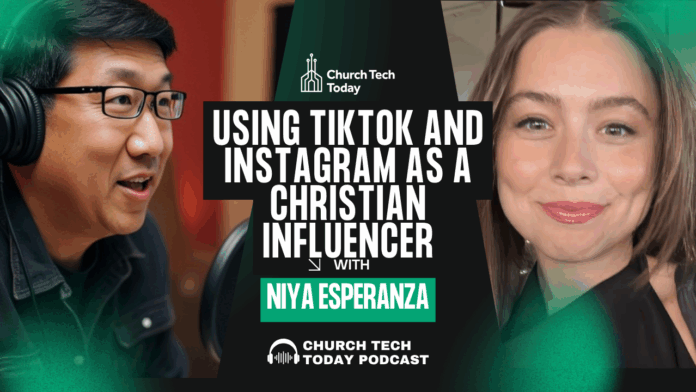
Join Kenny Jahng as he sits down with Niya Esperanza, a social media influencer with over a million followers, to explore her organic and impactful approach to sharing faith online. Niya shares her journey of leveraging platforms like TikTok to engage with younger audiences while working actively in youth ministry. Listen in for insights on how authenticity and community building on social media can be an effective ministry tool.
In This Episode, You’ll Learn:
Niya’s unique approach to integrating faith into daily content
Strategies for engaging younger audiences on digital platforms
Tips for churches to effectively use Instagram and TikTok
The importance of authenticity and consistency in social media
How to handle challenges and misconceptions about digital ministry
Key Quotes:
“People just want to see you. They want a good story.” — Niya Esperanza
“Social media should not just be a place where you’re showing what you’re doing, but who you are.” — Niya Esperanza
“Christians have an opportunity to come in and use social media differently in a way that stands out.” — Niya Esperanza
Links & Resources Mentioned:
Niya’s Tiktok: https://www.tiktok.com/@niyaesperanza
Niya’s Instagram: https://www.instagram.com/niyaesperanza
Niya YouTube: https://www.youtube.com/channel/UCgNfji8YRPm7S91enqssO2w
Talks with Trey (Niya’s brother): https://www.youtube.com/@talkswithtrey1510
Niya’s Online Store: https://forallpeople.com/
About the Church Tech Today Podcast:
The Church Tech Today Podcast helps pastors, church staff, and ministry leaders navigate the intersection of faith and technology with confidence. Hosted by Kenny Jahng and brought to you by www.FrontDoor.church.
EPISODE TRANSCRIPT
Kenny Jahng [00:00:00]:
Hey, friends. It’s that time again. Kenny Jahng here. We are here in a special session. I’m, like, I’m giddy. I’m, like, giddy as a teenager here. It’s one of those moments where you meet people across the interwebs and then somehow make connections. And connections. And here we are sitting live. So I’m here with someone that I follow that has over a million followers across all platforms and I think is just gonna be, someone that you’re gonna hear from a lot more. And, Naya, welcome. Welcome. How are you doing?
Niya Esperanza [00:00:29]:
I am doing so well. Thank you for having me. This is so fun.
Kenny Jahng [00:00:32]:
So first of all, I know TikTok is, I think, your primary platform. Mhmm. Why don’t you share with everybody what platforms you are on and what’s your handle so everyone can, like, abandon this right now and go follow you and all those things?
Niya Esperanza [00:00:44]:
Oh my gosh. Thank you. I am on TikTok that I would say is my main one. My username is the same on everything. I have a unique name, so it’s just Nya Esperanza, n I y a, and then Esperanza is my last name. So it’s the same on everything. I’m on TikTok, Instagram. My brother is really trying to get me to start a YouTube. He has a YouTube, and he thinks I need to have a YouTube. So I have an account on there that maybe I’ll start posting on.
Kenny Jahng [00:01:05]:
Oh, well, let’s shout out. Let’s let’s give some Trey some shout subs.
Niya Esperanza [00:01:09]:
Trey’s Trey’s YouTube is talks with Trey. He started when he was, like, super little, but now he he’s actually, like, a really good video editor. And every time he makes videos, I’m I am very impressed. So he is over on YouTube, which is my little brother. I make videos with him too. Awesome. So
Kenny Jahng [00:01:25]:
so I started following you probably a year ago, a little a little over a year ago. And what has been interesting to watch and develop this relationship between viewer and creator Yeah. Is seeing how you are actually witnessing your faith where it’s not an explicit evangelism channel or anything like that. It is act I don’t know how you would describe it, but you do some mix in terms of you’re not scared to share your life at your work at the church, your faith life, even sometimes explicitly answering some questions about the Bible, and things like that. Yeah. How could you just share with us what is conceptually that mix or approach that you have just out of the gate so everyone gets understanding?
Niya Esperanza [00:02:08]:
Yeah. I will say when I started posting on social media, I had absolutely zero intention of being where we are today. Like, the second video I posted went really viral. I just had video ideas for other people, and they weren’t taking them. So I was like, okay. I’m just gonna make them, and it was fun. Slowly, as I started posting more, I was getting questions about Christianity. People DM me, like, every day saying they don’t know how to read the Bible, but they’re really interested. They don’t know how to pray, but they really want to. How do they get closer to God? And I was like, well, this is what I do in my regular life. I work with the youth group at my church. And so I was like, well, I have answers to this, but I would say people ask me to describe my content, and I have a really hard time because it feels very random. I when I wake up in the morning, I don’t know what I’m gonna post that day. I kind of just post my day, I will say. Like, other people will do, like, a morning recap or night. I don’t do that as much, but I just show things that I’m doing or things that I’m talking about in my real life then kind of get shown online also. So I work at a church, so that’s part of my day. So I’m gonna post about that. You know, if I’m learning something or if I’ve been processing through, like, a question that people have, people I love Taylor Swift. So people love to ask me about listening to Taylor Swift as a as a Christian. That’s, like, a big question that I’ve gotten asked a bunch of times. So I’m like, okay. Like, I’ve had to think about this for myself. I feel like I’ve processed this with the high schoolers that I work with at my church. So then it kind of naturally comes out in my social media. And I would say I just show my life, and part of my life is that I am a Christian. So that does come out.
Kenny Jahng [00:03:31]:
It’s you’re not hiding it. Right? You’re not
Niya Esperanza [00:03:33]:
Yeah. Yeah. Yeah. Yeah. I’m not
Kenny Jahng [00:03:34]:
hiding it. Yeah. You’re it’s not like you you’re not trying to plan in a cooking show. There’s something it’s representing who you are. Now tell me, how do you personally see your influence on social media in terms of both for your generation and or let me let me just backtrack. Who are most of your followers? It’s it’s not old fogies like me. Right? Like, who are your followers?
Niya Esperanza [00:04:00]:
My main demographic is, like, the youngest demographic that it shows you. So I would I joke that it started as middle school girls. I would say that was a couple years ago. So it’s probably, like, high school girls, early college girls mostly, and then some people my age. But I would say it’s mostly younger, young adults, high school, middle school, that age range, predominantly females, but I do have some guys that follow me too. Honestly, one of my videos that did really well was with my little brother, and so I got a bunch of middle school girls that followed me back when my little brother was, you know, taping his hair. He braided his hair and put tape in it, and all these middle school girls was like, oh my gosh, your little brother. And now they’ve just stuck around, and so they’re still they’re still there.
Kenny Jahng [00:04:40]:
Honestly. Okay. So let me go back to the question. So,
Niya Esperanza [00:04:43]:
like Yeah.
Kenny Jahng [00:04:43]:
How do you personally see your influence on social media as the impact on ministry? Like, do you do you feel like it’s actually moving the needle? Have you had conversations that really do answer questions and bring people closer to Jesus. How do you see that?
Niya Esperanza [00:04:59]:
Yeah. I do see that, which is really crazy. So I get messages, like I said, all the time. And people say this, but I get overwhelmed because I’m like, if I had the time, I would reply reply to every single one of these, and I think every single one of those would lead to a really, like, lasting awesome conversation. But I try to take, like, the main questions that I get asked and then make videos about those so that, hopefully, then that can get shown to more people. So people ask how to read the Bible. So I’ve made a lot of videos of, like, here’s some easy things you can do of how to read the Bible, and people have followed up and messaged me and said, this has changed my life. I’ve started reading the Bible. Some girls just showed up at our youth group a couple weeks ago because they had, like, seen our youth group on social media. They’d seen me on social media, and they showed up. We’ve had a lot of crazy things that have happened because of social media. But I also think beyond just social media, we just released a devotional. So I have we have a website because we have a lot of content that we have created in our youth ministry. And so on that website, we we released, like, a line by line guide through the Lord’s prayer to kind of teach people how to pray. And so it’s like a downloadable PDF that I can just say, hey. Go get this. It’s cheap. It’s really awesome. We used it with our youth ministry first, and so it’s been tried and tested with hundreds of people. And so now these people online are, like, responding to me that they really are, like, learning how to pray, learning how to read the bible. And so I have seen it totally make a difference in people’s lives. And I just think social media is a place where people are. And so if Christians aren’t there, then we’re missing the opportunity to have influence to that space. And if we remove all of ourselves, then we remove a lot of the redeeming qualities of social media. So, yeah, I have seen it make a big impact in people’s lives.
Kenny Jahng [00:06:34]:
What do you think pastors fundamentally misunderstand about reaching these younger generations through digital platforms? What’s your sense of, like, where are they missing the boat?
Niya Esperanza [00:06:46]:
A thing that I think pastors are missing, I also work with the youth ministry at my church, and we have a student leadership team, and I run the media team. So I also run, like, our high school’s social media page, and I have my page. So I’ve kind of seen both sides of it. And I think social media, a thing that we do with our high school students on, like, the first week of student leadership is I have them pull up our account, and I say, what would somebody who has never been to our high school ministry think that we value? What would they learn about who we are based on our page? And we kind of go through, okay. They would say that we really like Sundays and Wednesdays, or we really like this thing. But would they know what sermon series we’re in? Would they know that we care about this? Would they know that we care about this? And we kind of, like, make a list of things we really do care about and things that our social media is showing that we care about. And I think social media should not ever just be, especially for churches, like, a place where you’re showing what you’re doing. It should be where you show who you are. So with our youth ministry, we wanted to see we want it to show what we value and who we are as a per as a youth ministry instead of just, oh, we have this event coming up. So I think a lot of times I’ve scrolled through church Instagrams. I’ve run my church’s, like, big Instagram account, and a lot of people are like, oh, can you post that we have this event going on? Like, we really want this event promo. And there is a place for that, but just I think it can be used for so much more than that. It’s not just to promo an event or to tell people what’s going on. It’s also to share about who you are. And I think that’s kind of what I get to do on my page too as people know who I am as a person and part of who I am as a Christian. So they see, like, oh, there’s this person. She’s a Christian, and she does this thing, or she’s oh, she’s, you know, walking her dog, and she loves Jesus. And so it’s not just like this in a bubble thing, but it’s a little bit broader.
Kenny Jahng [00:08:21]:
I I let’s dig a little deeper on that because I think, in the ministries that we coach and that we Yeah. Encounter in terms of pastors, they always feel this trepidation before going to social because they’re like, oh, we need a studio and a light kit and all this stuff. And if you go to your account
Niya Esperanza [00:08:39]:
I disagree fully. Yeah. It says
Kenny Jahng [00:08:41]:
raw as can be. You are in I mean, you’re in your car.
Niya Esperanza [00:08:45]:
I’m not good. I’m not good at it. Yeah.
Kenny Jahng [00:08:47]:
Or sometimes there’s tears, honestly. Yeah.
Niya Esperanza [00:08:50]:
Yeah.
Kenny Jahng [00:08:50]:
And I think this is just what even the editing, I I think you’re a little bit intentional of not making when you do edit your videos, you are not put you’re not making it just completely polished, which I find No. Super interesting. So that’s an intentional choice on your side.
Niya Esperanza [00:09:05]:
For sure. Yeah. I think I mean, I don’t think I possess the ability to do, like, the really polished thing I’ve tried. Like, I got to go to the Lakers game, and I got to sit courtside, half court. This brand was like, you just have to post a video making our food, and the food was fantastic. I was like, this is actually the best thing that’s ever happened to me. And so I tried to make a video making their food, and I was like, Trey, my little brother, he’s he has the, like, polished thing down. Like, he can do it. I was like, Trey, I need you to help me. And we were trying, and we were halfway through making the video, and I was like, this just doesn’t feel like me at all. Like, this is not a video that seems like something that I would make, and I don’t like it, and it’s stressing me out. And so I think that people can tell they can see through fakeness on the Internet, especially young people. I think they can tell if you’re being genuine or you’re not. So I think the most helpful thing to do on social media is to be authentic and to be yourself. And you said I cried. My mom used to be very concerned when I was crying on the Internet. It was not her favorite thing. She would be like, are you okay? Like, why do you have to post about you crying? Like, why are you doing that? And, eventually, she was like, okay. I think I kinda get it. Like, you are being vulnerable. You are showing people that it’s okay to not be okay all the time. And so I think there is a time and place for things to look really cool, and it can be awesome. And I think high production value does go really far, but I also think that people just want to know you and they want to feel connected to you. And same thing goes for your church or for your youth ministry. Like, if they just see the people and see you and feel connected to you, I think that’s more important. So, yeah, I would say it does not need to be perfectly put together, or you don’t need to be fantastically perfect at perfect at editing. Just be yourself, and that will take you farther. You’ll find the people that like that.
Kenny Jahng [00:10:50]:
The first steps that a pastor needs to do and if you follow, a guy named Gary Vaynerchuk. Right? He’s he’s
Niya Esperanza [00:10:56]:
a Yeah. Yeah.
Kenny Jahng [00:10:57]:
Guru. He says, you must document, not create. So don’t create these polished things. Just document what’s going on behind the scenes. So is is your prescription really for and this is gonna be scary for a lot of pastors listening in here, that they should just get out their phone. And even if it’s on their car before their car ride home from the office or something, they should just put up a video that it’s not perfect. They don’t even have a camera mount in their cam car or anything like that. You just wanna talk to the camera and don’t even edit. So there’s no, like, logo or swipes or anything like that.
Niya Esperanza [00:11:34]:
Yes. I would say that. I post in my car all of the time, and I don’t have a car mount. Like, I set it on my steering wheel. I don’t have I barely have a ring light at my house for because our house is dark. Like, that’s the I got and I got it as a gift. Like, I do not think that you need to post anything crazy. I tell all of my friends, I think anybody could do TikTok. I think anybody can do social media. It’s just about getting out there and posting consistently. I was messaging someone this morning who posted on their Instagram. Should I start a TikTok? I said, yes. Absolutely. Like, I think that the barrier to entry is low, and it’s better to just start posting and get comfortable. I also think it’s really hard to starting out, talking to a phone can feel really weird. And I remember the first Instagram story that I ever posted. I was in college, and I was really excite it was, like, I think it was National Down Syndrome Awareness Day or something, and I was really passionate about it. I was like, I’m gonna post this thing. And watching it back, I I felt very uncomfortable. Like, I was not good at talking to my phone. So you the only way to get better at that is to have more reps. So the more you do it, the easier it will get. And now it’s, like, second nature to me. I don’t even think about it. It’s really like, comes really quickly. But I think, yes, to pastors, I would say get your phone out. Just record. Just post. Every single I will say every single video I have posted that has gone very viral was an unplanned video Mhmm. Was something that was not polished. I will work the hardest on videos, and it’ll get, like, no views. And the videos that are random get the most views. People just wanna see you. They want a good story. They wanna be either, like, entertained or informed. I feel like those are kind of the things people talk about. And so if you have information to share, pastors obviously do, just talk and just practice and just keep going, and eventually, it’ll you’ll get better at it.
Kenny Jahng [00:13:13]:
What do you think what’s one one or two things that churches think young people want, but they don’t actually care about?
Niya Esperanza [00:13:21]:
Oh, I’ve been talking to a lot of people about younger people, and there’s this idea that older people can’t speak into younger people’s lives, that young people wanna hear from young people. And I think that is true to an extent, but also in youth ministry and in my life, I have seen countless times that, like, older adults speaking into younger people’s lives is some of the most impactful things. In our youth ministry, we have some really awesome adults that are, like, a lot older than the rest of the people on staff, and they are some of the most beloved, some of the most, like, cherished people in our youth ministry, and our students love them. So I would say you don’t need to be young. Maybe that’s one of the things. It doesn’t need to be hip and cool. If they can tell you’re being genuine, I think that’s the thing that they want most. And, like, if you are I think if you’re trying to be cool, people see through that. So just don’t be cool, and people will love that. Like, that’s okay. Just be yourself. Another thing that young people
Kenny Jahng [00:14:19]:
Like, what’s what’s cringe for young people that this
Niya Esperanza [00:14:22]:
What’s cringe?
Kenny Jahng [00:14:22]:
Yeah. What that that the pastors and churches and these leaders that think that they
Niya Esperanza [00:14:27]:
I think if you I think if you know that you’re cringe, that’s hilarious. I think that’s great. Like, don’t worry about it. If you’re trying not to be cringe, I think that’s cringey. Like, literally, just post the cheesy video and know that it’s cheesy. But if you think that’s really cool, that’s and you’re giving off the vibes that it’s really cool, then I think that’s harder. I think what else is cringe? I think if you’re just posting, like, photo if you aren’t posting posting videos at this point, I think you’re behind. So, like, if on Instagram, if you’re not posting reels, I think you’re behind. We, in our social media team, have gone almost exclusively over to making announcement videos. And they’re funny and they’re creative and they’re different, and it’s not people talking. I think if you’re just talking to the camera and you’re saying, hey. Come on Sunday. We have this, this, and this. We my high school students always say, we don’t have enough dopamine for that. Like, you gotta entertain us in some way. Like, we are gonna stop paying attention. So I don’t even know if it’s cringe, but people just won’t interact with it in the same way. So we once did the video where, like, Subway Surfer is a game, you know, and they split screen it. So you see people playing the game and someone talking, or we always try to do, like, funny things while people are talking to keep people entertained. I think if you’re just talking to a screen, you’re gonna lose people. If you’re if you’re giving an announcement, talking to a screen, you’re gonna lose people. I think if you’re telling a story or you’re, like, getting someone excited about something, there’s totally a place for that. I talk to my phone all the time. But if I was just like, come on Sunday to church, we’re gonna talk about this, I would say get more creative than that.
Kenny Jahng [00:15:52]:
So can we talk about, like, your thought process of when you’re recording a video like that
Niya Esperanza [00:15:57]:
Yeah.
Kenny Jahng [00:15:58]:
That narrative arc or what? Are you planning what all these experts are saying? You need a three second hook. You need to open a loop and have multiple loops and micro hooks, and it doesn’t seem like you’re planning it that way. Uh-uh. And yet the algorithm is rewarding you.
Niya Esperanza [00:16:14]:
Yeah. They do. I think I do not plan it at all, and I might save a lot of time if I did plan it because sometimes like, there’s some videos I’ve done if I’m trying to say something serious or if I’m trying to talk you know, I did a video about being a Christian and listening to Taylor Swift, like, the election. I did the he gets Us commercial with, the Super Bowl last year. I have it in my head, and I just start talking, and it takes me a couple takes to figure out what I wanna say. So I’ll say it, and I’ll listen back to it. I’m like, okay. How could I say that differently? And then I go back, and I do it again. But I think I do think a hook is interesting. I think if there’s something that, you know, people are listening to, like, they’ll watch it longer, which is good for interactions. I also think sometimes if you mess up a little bit, then people comment and correct you, and, like, that’s kind of okay. So I just posted this is not like a Christian video, but I just posted about the comparing the Luca Anthony Davis trade to Taylor Swift.
Kenny Jahng [00:17:08]:
Yes.
Niya Esperanza [00:17:08]:
And when I was thinking about it in my head, I was like, this makes sense in my head. People might disagree with me, and that’s okay because then they’ll comment, and they’ll say I’m super wrong. People actually, for the most part, said that I was not wrong, so that was that was nice. But I think that I am okay with messing up a little bit as long as it’s not, like, heretical. You know? Just, like, some sort of little bit of controversy is okay. And if there is a hook, a visual hook, I think, is really interesting. That, I think, is almost more important than exactly what you’re saying. So a visual hook is just set your phone down or, like, don’t have a millennial pause. Cut out the very beginning. Start talking at the first second. Change where you’re change where you are throughout the video. So if at one point you’re sitting in your car, then you get out of your car, then you set it up in your kitchen, and then you get here. People that helps with the dopamine, that helps with people paying attention to the video, but I don’t I’m not good at putting into practice what all the other people say. And I’m sure those things help, but I just kind of talk and post what is in my brain. I think I talk fast too, which is helpful.
Kenny Jahng [00:18:08]:
Yeah. You even talked about that in one of the videos. So that that is part of, at least for you, the formula of getting people to listen. So Yeah. At this point, I think you get a sense of, oh, this you I don’t know. Maybe not. How confident are you when you’re posting something that it will hit or not? Are there topics or there certain things you know that this thing will actually get views or not?
Niya Esperanza [00:18:35]:
I think some things yes and some things no. I am incredibly surprised sometimes by the videos that go viral. I like, with TikTok specifically, I think it’s more there are times when the algorithm likes my account and will push all of my videos. And I think most things I post in that time will do kind of okay. And then there’s times where it’s like, oh, I’m not in the algorithm as much. I’m not being pushed as much. And so you have to work a little bit harder to find something creative to post, and then that’s kind of when I could tell or not tell if something’s gonna go well. I think if I’m doing a video where I’m talking about, like, a Christian point of view on something that is big in culture in that moment, that will usually do well, to some extent. I think people you gotta look for what’s going on in the social media world. And if you attach yourself to that, that will usually do well. So if Taylor Swift is having a big day and I post about Taylor Swift, that will usually do well. If, you know, the Luca eighty trade was a big deal, so if I talk about that, that will usually do well. Like, the Olympics, that was a great thing. Those were gonna do well. So you’re, I think, looking for things that are going on in the real world. And if you can come up with, like, a Christian take on that or something like that, that’s a great place to be. Or if you can make a joke about something that’s happening, that’s those will usually do well. I think a lot of my, like, I’m just gonna you know, my day in the life don’t always do super well. But I think that those are fun for people that already follow me. So I think it’s, like, important to have both, and I don’t if I don’t think a video is gonna do well, I don’t not post it. I will still post it because it’s important to put things out there.
Kenny Jahng [00:20:07]:
Okay. So let’s go back to that. That that is one rule I think that is true across social is that consistency
Niya Esperanza [00:20:13]:
Yeah.
Kenny Jahng [00:20:14]:
Is probably more important than even being Yeah. Super creative. Right?
Niya Esperanza [00:20:18]:
Yes. I have posted. I have taken a week off. I go backpacking every year with the youth group, and we have no cell service, don’t have our phones. So I’ve taken that week off every year for the last four years that I’ve done TikTok. Other than that, I have posted almost every single day. There’s been a couple, like, days here and there, but I would say almost every single day, I’ve posted multiple videos for the last couple years. And that is how we’ve gotten to where we are. There’s not been, like you know, some people gain, like, 2,000,000 followers in a week. That’s super cool, but that has not been me. I’ve been posting for almost four years. And slowly, consistently over time, we’ve built it up, and I think that consistency is one of the most important things. I think it’s a lot harder to get back into it when you stop. Even I always say I wake up every day. I’ve already said I wake up every day. I don’t know what I’m going to post. If I haven’t posted, that’s even harder because I’m like, I get comments. So, oh, I can reply to this comment or I could show you a different thing that you’re interested about or, oh, I should make a video responding to that. And if I have none of that going, then just starting from scratch sometimes feels harder. So I think just getting into the habit of posting things is easier.
Kenny Jahng [00:21:21]:
You’re also not syndicating all your content everywhere at the same time. So, for example, your TikTok videos are not the same at least timing as your Instagram videos. Can you talk about that? How intentional or unintentional that is?
Niya Esperanza [00:21:35]:
Yes. I get told all of the time that I need to be better at syndicating my content across platforms. But to me, my Instagram feels like my friends
Kenny Jahng [00:21:45]:
Mhmm.
Niya Esperanza [00:21:45]:
And, like, people TikTok to me has always felt very, it’s, like, ambiguous who is actually following me. And even though I know people in real life follow me, it feels like it’s kind of just the Internet. And, like, there’s a big number on there, but that’s really hard to comprehend. So in my mind, I’m just, like, putting a video out there. Who knows who’s gonna see it? On Instagram, it feels to me much more like people I know are gonna see it. And so I I’m like, okay. I’m gonna curate more what I put on Instagram. I want one of my goals is to be a little bit better at Instagram. I definitely like Instagram. I think one of my favorite things is Instagram stories. Like, I love Instagram stories. So I can post things on Instagram stories that you’re not gonna see on TikTok, and, hopefully, you’re providing different content on each of those. Because I do think, like, if somebody follows me on TikTok, why do they need to see the exact same video on Instagram? I know that you’re supposed to do that, and I think it’s great. And if you’re running a church, definitely post it on both. But if there’s, like, a little bit difference in timing or a little bit of a different caption or something to be a little bit creative to spread it out, I think that that’s helpful. But I definitely think I theoretically should be better at that. I just don’t have enough time in my in my day.
Kenny Jahng [00:22:57]:
Okay. Let’s talk about that. So you said you just post a couple times a day. We all know consistency is the number one thing. If you’re going if you’re listening to this right now, the challenge is before you go to bed tonight, can you just post something today and get started?
Niya Esperanza [00:23:12]:
Yeah.
Kenny Jahng [00:23:13]:
Are you I think you’re editing your video you’re shooting and editing natively in the app. It’s not you’re not taking it to your Mac and editing or something like that. Right?
Niya Esperanza [00:23:22]:
Yeah. I’ll edit in TikTok or I’ll edit in CapCut if I throughout the day. Because in TikTok, you used to be able to download your drafts without a watermark. Now you have to post it. You can post it to private, but it’s, like, a little bit more tedious. So sometimes I’ll film outside of the app, but then I just edit in cap cut on my phone quickly.
Kenny Jahng [00:23:40]:
And then each video, guesstimate. How much time are you spending editing that video?
Niya Esperanza [00:23:49]:
That’s a great question. I would say some videos I don’t edit at all, and I just post them, and maybe it takes five minutes to make that video. Some videos are gonna take thirty, forty five minutes. It just depends on how many cuts there are and if I’m gonna put any stickers or text or to make it more interesting.
Kenny Jahng [00:24:03]:
Got it. How important is that? You know?
Niya Esperanza [00:24:05]:
I think it helps. I I really do think it helps. I don’t think that I always spend as much time as I could on my videos. So, you know, going back to the Luca eighty one, I put stickers on that one. That video took me almost an hour to edit, and I was getting so annoyed. I was like, I just wanna post this. I want it to be done, but I was like, I think it’s better with the pictures.
Kenny Jahng [00:24:26]:
I think it’s
Niya Esperanza [00:24:27]:
better with the words. In there. So I did it, and it the video did pretty well. Okay.
Kenny Jahng [00:24:31]:
So I do think it helps. Okay. I wanted to talk about this little I think it’s a mindset where what you’re prescribing is not to post content, but actually to build community. Yeah. Definitely. Think there’s a very big difference in that Yeah. Where, so can you talk about that? And a pastor who doesn’t understand that paradigm shift at all, what what does that mean in terms of how you’re framing it, how you’re editing, what you’re what you’re writing even in terms of, the descriptions, etcetera?
Niya Esperanza [00:25:00]:
Yeah. I think if you are a pastor and you have not scrolled on social media at all, it’s gonna be a little bit hard for you to maybe comprehend what we’re talking about. But just know, like, there are people on social media that are scrolling, and they feel connected to other people that they are seeing on social media. So they feel like they have it’s, you know, the parasocial relationship situation. They know what’s going on in that person’s life. They’re invested in that person’s life, and they want to see more of it. And I think that is part of why I’m able to share my faith. Part of why I’m able to talk about being a Christian is because people feel connected to me, and they know that a part of my life is that I am a Christian and that that is genuinely a part of my life, and so they wanna hear more about that. So if you are thinking about doing that, it’s not just that you’re gonna post really good content about some answer to a question. I think it would be that you also show a little bit of your day to day life, a little bit of your personality so that people can feel connected to you. I love the Instagram stories feature. That’s actually how we ended up here because you replied to the story and saw that. And so, you know, just put a question box on your story. Be like, what do you wanna know? Or ask a question and have people give you their answers to it. People wanna feel connected to you, like they’re talking to you in some way. And so, yeah, Instagram stories are really easy way to get feedback from people. If you think of a really hot topic question, you know, one of my best TikTok videos was what do you call if you’re gonna take a sip of water without putting the thing the water bottle on your lips, what are you gonna call that? In Orange County, we are the only people that call that a birdie. Everyone else calls that a waterfall or air sip or something like that. And we are the weird ones over here. And so we went and asked a bunch of people that, and people just had so much dialogue about that. Now they are invested in that. So if there’s a question that you can ask people or feedback you can ask for about your life, I think that that’s really helpful too. And I I think that I do that, or I share enough about my life that people give me feedback. Last night, all I wanted for dinner was craft mac and cheese. So a bunch of I was like, what should I get for dinner? And a bunch of people told me things I should DoorDash for dinner that were not that. Yeah.
Kenny Jahng [00:27:05]:
I was gonna DoorDash you some grapes.
Niya Esperanza [00:27:07]:
I saw that. I was I don’t like grapes. I don’t like fruit. We’re working on it. But that’s the kind of thing is, like, you share the weird random details of your day to day life, and then people start to feel invested, and they start to all feel in it together. And it’s not just like you’re following this random person. You’re following somebody that you actually kind of know a little bit about them. And I think that’s So
Kenny Jahng [00:27:28]:
I love the fact that you’re also, like, really in you’re actually working in youth ministry. So you’re not just the influencer from afar on social media outside of the church. So you’re actually working with the next generation hand in hand to your active interactions. What do you say to a church leader that says, I don’t have time for social media. How would you challenge that thinking or how important is it to show up on the screen for this generation? Like, what is what’s the cost for somebody who says we’re not gonna do social media, we’re not gonna invest in digital ministry, in in order to reach this generation where this is actually in their hands twenty four seven, they sleep with it, what are they missing out on? How do you what do you say to that pastor?
Niya Esperanza [00:28:12]:
Yeah. Well, I think social media is like your front porch. It’s the way in, and it’s where people are gonna find you. And so if you have if you’re trying to reach people that are not currently attending Sunday services, which I just heard a statistic. You can correct me if I’m wrong, but I’m pretty sure it’s true. They figured out what percentage of Americans go to church three out of four Sundays, but not just Christian. Any religion, three out of four Sundays. Do you know the percentage? I think it’s 3%.
Kenny Jahng [00:28:35]:
Yeah. It’s very low.
Niya Esperanza [00:28:36]:
It’s very low. In The US.
Kenny Jahng [00:28:38]:
I think for Protestant churches in this in The States now, the average church goers goes, like, two times a month if they’re if they’re if they call themselves a church goer.
Niya Esperanza [00:28:48]:
Yeah. Yeah.
Kenny Jahng [00:28:49]:
Yeah.
Niya Esperanza [00:28:50]:
And so you have all of these people that are not stepping foot on church campuses, but they are on their phone twenty four seven. And so I know I’ve heard you know, I work with high schoolers. I’ve seen a lot of dangers of social media. Like, that is true. I don’t just wanna say there’s, like, nothing wrong with it, but that is where people are, and it is how they can find your church. We have had students, like I said, show up to our youth ministry because of our Instagram and because of my social media. Like, both have happened multiple times. And so it is a foot in the door to get people to come check out what’s going on And a way I don’t know. If someone’s not coming to church and they come across your page or they’re looking for a church to go to, they are going to check social media. That is what they will do. And if you don’t show up, you are missing out because that is where they will go to look up something. They’re gonna look it up and they’re gonna say, oh, what does this look like? Where am I gonna go? Like, they’re probably anxious to step foot on a church campus, and so you can show them what your church is like. Oh, there’s actually people that go here. Oh, we’re friendly. Oh, like, you park here and you walk here. All of the things somebody would be stressed about, you can alleviate before they even get there through social media. So I think that you are missing out on the opportunity to reach out to a lot of people that are on social media. And I also think that Christians always have been able to redeem things that were meant for bad and use it for good. So even if you think social media is the worst thing that has that has ever happened to the planet, if all Christians remove themselves from social media, we now have something really, really bad with no Christians with nothing good on it, and that just spirals to worse and worse things where Christians have an opportunity to come in and use social media differently in a way that stands out. And I think when you are a Christian, you look different than other people that are on social media. Like, I could post a lot of different kinds of videos that would get way more views that I don’t do. And, like, maybe I’d have more followers. Who knows? But maybe not. But that you stand out when you’re a Christian and people can see that, and it changes the space. Like, it changes social media. You can you can make an impact on what people are actually seeing. And so I think that that’s really cool.
Kenny Jahng [00:30:48]:
What about the objection that we get all the time that social media are soundbites? I’m here to produce sermons and give a full length sermon that really teaches you and disciples you how the heck can we disciple somebody in a thirty second reel or short or something like that. What what’s your response to that?
Niya Esperanza [00:31:10]:
Well, I would just say that God can use anything. I don’t think that we get to determine what God can use. So if we only think God can use our long sermon, then I think that that’s an issue. I would be curious why he wouldn’t want to use social media or why he wouldn’t use those thirty second interactions. And I think maybe we don’t see, like, the direct one to one ratio as or one to one, you know, result as easily, but that doesn’t mean that God is not working in that. And there have been times where I’m having a bad day and I scroll scroll through social media and somebody just, like, says something that reorients me back to, like, oh, I should probably go talk to Jesus about this. Like or let me let me just take a moment and pause and pray, and that wouldn’t have happened if someone hadn’t taken the time out of their day to post that video. So I don’t I also agree that church is really important. I think if your only discipleship strategy is posting videos on Instagram, also a question to think about. Like, I think you need both. Like, you need community. You need people meeting together. You need accountability. But I just don’t think that posting those soundbites or posting shorter things is gonna hurt anything, and I think that God can use it. And we’ve seen that he does.
Kenny Jahng [00:32:12]:
I love it.
Niya Esperanza [00:32:13]:
I’ve seen that he does.
Kenny Jahng [00:32:14]:
Naniya, you are willing to be bold with your faith online. Yeah. What would you say you’ve learned about being both unapologetic and approachable when sharing Jesus? Like, there are a lot of haters. I’m assuming that you see the haters in the comments or in your DMs. What have you learned in terms of being approachable or or reaching the that type of population?
Niya Esperanza [00:32:41]:
Yeah. I think one of the most shocking things is that I don’t get that much hate, and I don’t get that many mean messages. Like, almost zero. I could screenshot them and remember them because they don’t happen that much. There’s, like, videos that go really viral. And if a video goes really viral, honestly, I stop reading the comments. That’s where I’m like, it’s it’s too far out there. Like, I don’t I don’t need to see what’s going on there. So I do get mean comments on certain videos, but as a general statement, people are very, very kind. And I think that people have a you know, even if you’re not a Christian, if somebody is sharing their testimony, their life, the way God has impacted them, that’s really hard to refute. And so I’m just sharing my day to day life. I’m sharing how God has impacted my life, and that is a lot harder to argue against people. Even people who don’t like Christians are like, okay. Well, that’s okay for you. You know? And then okay. Great. You can see how that impacts me, And maybe one day, eventually, that’ll make you think about something. But I a surprising thing for me is that I have gotten not as much hate. I think something that’s really helpful for me is, like you said, I am in youth ministry. So I talk through issues all of the time with high school students, and I think there’s a way to do it on the Internet that, like, is more helpful. So I don’t think I’m trying to think of what I wanna say. But I think I’ve processed things in real life, so I know how to talk about it online. If I was just, like, saying rambling things online, I think you could get yourself in trouble. But I I usually have thought through the things that I’m gonna say, if I’m gonna say.
Kenny Jahng [00:34:05]:
What do you see the future in terms of what’s after short form video and TikTok trends and things like that?
Niya Esperanza [00:34:11]:
I hope it sticks around for a while because I like it. I do think that when TikTok was gone for, like, fifteen minutes, everybody was going over to YouTube and going to Instagram. I think forever short form videos are fun. Like, Vine died, and it found its way back with TikTok. I feel like people will continue to create those videos, but I do think long form videos are awesome. I know my brother, he’s 15. He loves YouTube. He watches YouTube all the time. And so I would say longer form videos. And also Instagram, but, like, less curated. And it we’ve already kind of seen that that’s the trend, but just posting things on Instagram, I think, is important. So there’s, like, silly reels. My entire the the youth ministry page that we run, my entire reels page is just, like, church announcement videos. It just knows that’s what I want, and that’s what it gives me, and I see that. There’s a ton of those. But then also just, like, cute, silly photos that we take at youth ministry events. Like, we love posting those, and those are super fun. But I think people just wanna feel connected to you. So however they’re able to do that, I feel like people will do that. I don’t really know what the future is.
Kenny Jahng [00:35:18]:
Okay.
Niya Esperanza [00:35:19]:
What What do you think the future is?
Kenny Jahng [00:35:21]:
Yeah. I I I think we have to figure out community, and I’m I’m actually shocked as all these platforms are just copycatting everybody. Yeah. There’s a plagiarism of business models that just has been accepted. Right? But the one thing that has not been plagiarized is Facebook groups. And so you probably don’t go on Facebook much, but, I think the core
Niya Esperanza [00:35:41]:
thing couple of ministry groups.
Kenny Jahng [00:35:43]:
Yeah. Right? But that’s the only reason. I think many people still hang up to Facebook because of the group functionality.
Niya Esperanza [00:35:49]:
Totally.
Kenny Jahng [00:35:49]:
It hasn’t been replicated that much. I think WhatsApp, is starting to invest in figuring out how to do groups online. But you would think that Instagram or TikTok or these other places are looking at that community aspect, which I I just think is the missing piece.
Niya Esperanza [00:36:04]:
No. I totally think you’re right.
Kenny Jahng [00:36:05]:
Right? Because the algorithms, all they want is for you to stay on their platform. Yeah. And if you the only way to do that, I think, that the next level is to build that community, the hub, where, instead of just going to your page or, you know, figuring out where you are in all the channels, where why not find something that starts to be peer to peer and not just one to many? Right.
Niya Esperanza [00:36:26]:
Like, for sure.
Kenny Jahng [00:36:27]:
Yes. What about the pastor who feels discouraged because their social media is not growing? They don’t get to a million followers like you, 2,000,000, three million, four like, your future is bright. But what about the pastor where they’re stagnant and they’re really small? How how do you respond to that?
Niya Esperanza [00:36:43]:
Yeah. I will say there was a year that I posted on TikTok, and, like, every single video did badly, and I had no idea what I was gonna post about. I initially started posting, like, with my ex boyfriend, and we broke up. And so I was like, oh, like, I have a TikTok account. And I offered to give it to him. He was like, no. You’re fine. I don’t even like social media. I was like, okay. Great. So I had no idea what I was gonna be posting about. And that entire year, I was like, I’m just going to keep posting, and and maybe I will never get a video that gets a lot of views again, or maybe something will stick eventually. But I would say I mean, number one, I would say pray about it. If you don’t feel, like, super called to it, there’s probably someone at your church who does have the gifting, who is called, and so find that person that you can equip that is not you. Like, if it is super draining for you, don’t do it by yourself. See if you can find someone to help you. So that would be my first thing. But also just, like, keep going, and you never know what is gonna stick. The weirdest videos of mine are what have gone off. Like, I made a video about candles, and and that was, like, my one of my most viewed videos ever. My dog got fixed. Like, my brother taping his hair. It’s always weird things. And so you never know what is gonna take off. And I also think, like, we get to be faithful in all of the small things. So you never know even if it gets I also just have a thing that social media numbers are really inflated. If your video gets 27 views, that’s 27 people. Like, think of a room of 27 people. That’s a a lot of people that are seeing what you said. So just because something doesn’t get a lot of views doesn’t mean it doesn’t have a lot of impact. You never know how that’s impacting other people, but also don’t don’t do it by yourself. See if there’s anybody else who wants to help you too.
Kenny Jahng [00:38:21]:
I love it. Well, now I know you’re busy. Thank you so much for hanging out for a little bit and sharing some of your wisdom. We gotta have you on again. Just as you leave Yeah. What’s the one thing the one thing that pastors that are watching this today that they should what’s what’s the thing that they should put on the calendar seven days? What what are the what’s the next steps? Like, how do they get started in investing in digital ministry this way?
Niya Esperanza [00:38:47]:
I would say that you need to figure out your why. So what is your purpose of posting? Is it for your church page? Is it for your own personal page? Are you trying to get people to come to your church? Are you just trying to get, you know, the message of Jesus out into the Internet? Love that. Figure out, like, what the purpose of your page is, and then just write down, like, 10 things that you know things about. Like, okay. I know a lot about Taylor Swift. I know about baseball because my brother played baseball growing up. I know about my dog. I know about whatever. And, like, how can you turn that into a fifteen, twenty second? Even just start with Instagram stories. Get yourself in the practice of posting things on Instagram stories. Like, how can you talk about that thing on your phone? Or how can you make a question box about that and just get people to start interacting with your account? And slowly, it will come easier. And then maybe the other thing I would say is, can you find anyone else who’s also excited about social media that could come alongside you and support you? Because if it’s not you, I guarantee you there’s someone you know that is willing and would be super excited to be asked. Even if it’s, like, your daughter’s friend, like, someone random, like, get creative, think outside the box. There’s a lot of people on social media that like social media. So how can you empower them and equip them to also help, you reach out to other people? I think it’s a cool
Kenny Jahng [00:39:54]:
Naya Esperanza, thank you so much for being with us. We’ll
Niya Esperanza [00:39:58]:
see
Kenny Jahng [00:39:58]:
you on TikTok and all the other platforms. Everybody, you need to actually go to Naya’s page. Also, I do wanna still give a shout at Trey’s YouTube. You need to go and subscribe and encourage Trey too. That’s Oh my gosh.
Niya Esperanza [00:40:12]:
Don’t make me cry.
Kenny Jahng [00:40:13]:
It’s a great family, and, thank you so much for sharing your life and the word of Jesus Christ with us and so many others, Naya. Thank you for
Niya Esperanza [00:40:21]:
taking care. So much for having me. So fun.
Kenny Jahng [00:40:23]:
Awesome. And everybody else, we would love to hear your feedback. What’s the one thing that resonated most with you in our conversation here? And then what’s something you’d like to learn? If we want to double down and and convince Naya to come back, what’s
Niya Esperanza [00:40:35]:
something else?
Kenny Jahng [00:40:36]:
What else what else can we double down and go down the rabbit hole with? With? Because I think this is the place where we don’t have the opportunities to interact with people like this that actually are practitioners of the digital tools that we all aspire to use to reach the next generation. So give me the feedback, and I hope to see you here on the next video.