



|
TL;DR The 2024 State of AI in the Church Survey shows pastors are embracing AI for research, content, and admin tasks—yet many still face gaps in expertise, ethics, and trust. 1. 66% of leaders see AI as valuable for ministry. 2. 43% use it weekly/daily; only 25% haven’t tried it. 3. Top uses: research, content creation, design, and admin. 4. Challenges: lack of training (41%), ethics (26%), and congregational concerns (10%). 5. Biggest win: freeing pastors to focus more on people and discipleship. |
Artificial intelligence (AI) is becoming more than a buzzword in church leadership. It’s a tool that is reshaping how pastors and staff approach ministry, helping them streamline tasks and focus on what matters most: connecting with people and spreading the Gospel. To better understand how churches are engaging with AI, Exponential’s AI NEXT and ChurchTechToday.com conducted a national survey on AI usage in the church this year. The results offer insights into where churches stand, what excites leaders, and the challenges they face.
Understanding the Survey
The survey collected responses from hundreds of church leaders across a variety of roles and church sizes. This wasn’t just a senior pastor’s perspective—executive directors, youth leaders, administrative staff, and even volunteers participated. The goal was to understand how different types of churches and leaders view AI and use it in their ministry work.
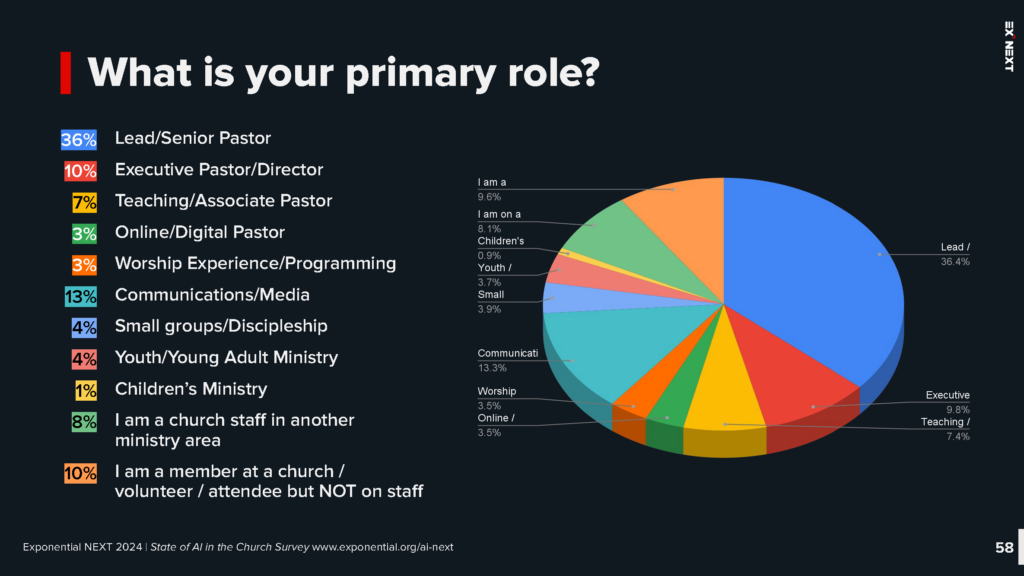
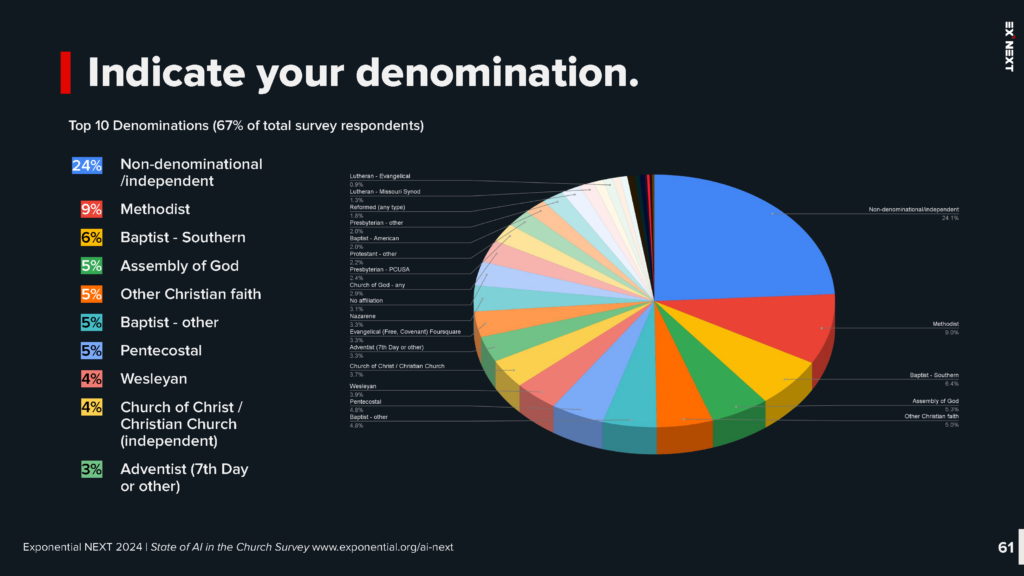
- Who responded?
- Most respondents came from smaller churches (51% had under 250 attendees).
- Generationally, Gen X (41%) and Millennials (32%) made up the majority.
Smaller churches often face unique challenges due to limited resources. Leaders in these settings are finding ways to use AI to bridge gaps, save time, and amplify their ministry efforts. The variety in roles and church sizes also highlights that AI isn’t just for tech-savvy megachurches—it’s relevant for everyone.
Why this matters:
Smaller churches often lack resources, so understanding how they’re adopting AI gives valuable insight into the practical benefits AI brings to ministry.
AI Adoption Trends
AI is no longer just for tech enthusiasts—it’s actively being used in churches. The survey revealed both exciting adoption trends and opportunities for growth.
- Who’s using AI?
- 43% of respondents use AI tools weekly or daily.
- Another 23% use AI occasionally.
- However, 25% have yet to try AI in ministry.
This means more than half of church leaders are using AI in some capacity, but there’s still room to introduce it to those who are hesitant or unfamiliar.
- What are they using AI for?
- Research and informational tasks lead the way (27%).
- Content creation is close behind (25%).
- Graphic design and image generation also rank high (15%).
- Process automation is growing but remains a smaller slice (8%).
For many, AI is helping with practical, day-to-day tasks like preparing materials for Sunday services or organizing events. Tools like ChatGPT and Canva Magic are particularly popular because they simplify complex jobs and produce professional results.
Why this matters:
Leaders are finding AI tools useful for tasks that often take hours—freeing them up for deeper ministry work and personal connections.
How Leaders Feel About AI
Church leaders’ perceptions of AI are crucial to its adoption. The survey found that most leaders are optimistic about its value.
- The Numbers:
- Two-thirds of leaders believe AI is valuable for ministry.
- Only 7% think it’s not valuable at all.
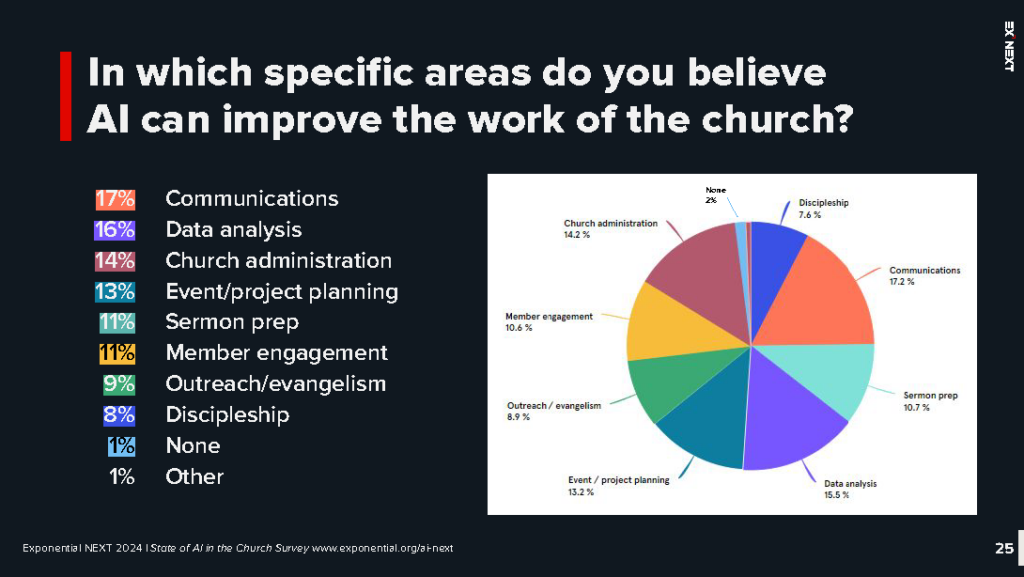
- Where AI shines:
- Communications (17%)—writing newsletters, announcements, and social media.
- Data analysis (16%)—tracking attendance or giving trends.
- Administration (14%)—scheduling and automating repetitive tasks.
- Event and project planning (13%)—managing timelines and volunteers.
Leaders see AI as a tool that can help with the behind-the-scenes work that often takes up time and energy. By streamlining these tasks, they can focus more on connecting with their congregation and fostering spiritual growth.
Why this matters:
AI’s biggest win so far is making operational tasks easier, allowing leaders to focus more on people.
The Challenges Churches Face
Even with excitement about AI, there are real challenges that leaders need to address:
- Lack of expertise (41%): Many leaders feel unsure about how to use AI effectively.
- Ethical concerns (26%): Privacy, bias, and fears of losing the “human touch” are top issues.
- Congregational concerns (10%): Some church members worry about AI’s role in ministry.
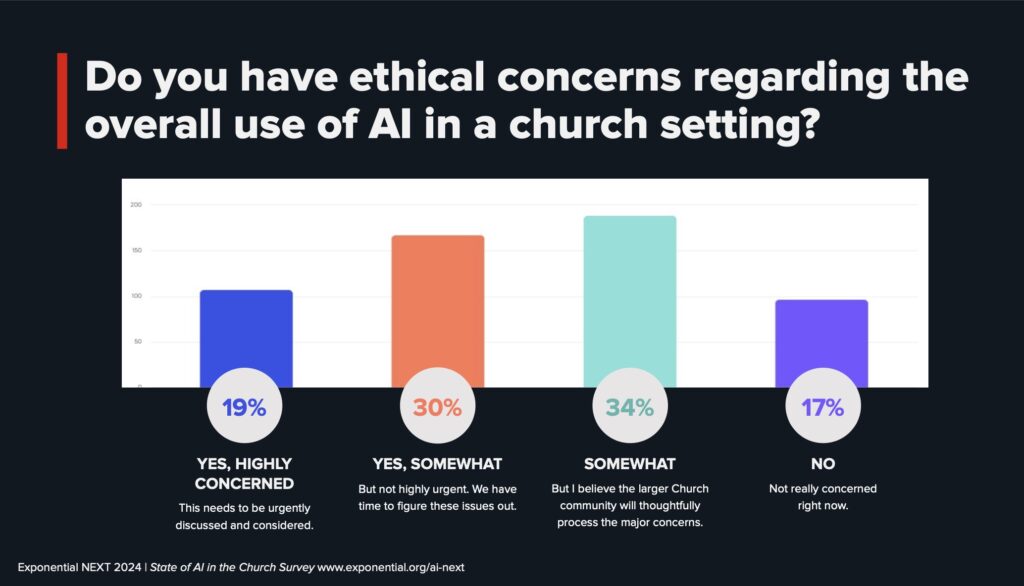
Ethical concerns in focus:
- Privacy and security: How safe is the data being collected and stored?
- Bias: Can AI unintentionally perpetuate stereotypes?
- Human interaction: Will using AI make ministry feel less personal?
These concerns highlight the importance of thoughtful implementation. AI tools should support, not replace, the personal touch that makes ministry meaningful.
Why this matters:
For AI to be successful in churches, these concerns must be addressed through clear policies and open conversations.
Sermon Preparation with AI
For pastors, sermon writing is one of the most time-consuming tasks. AI is helping lighten that load in surprising ways.
- The Numbers:
- 43% of pastors who prepare sermons use AI.
- How it helps:
- Structuring ideas and outlines.
- Conducting biblical research quickly.
- Adding creative insights.
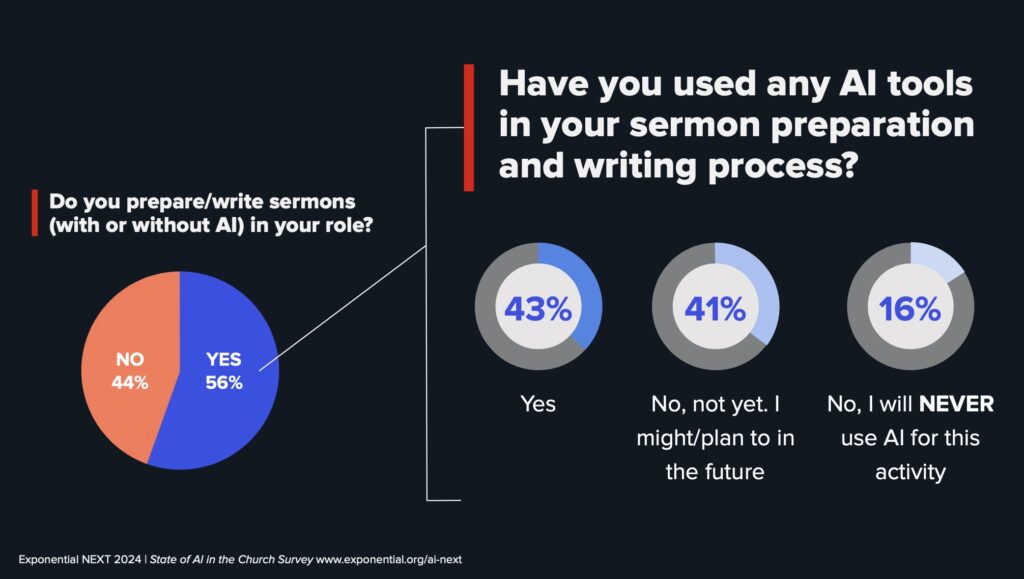
AI tools can’t replace a pastor’s spiritual insight or personal touch, but they can serve as a helpful partner in the creative process. Pastors report that using AI saves time and sparks new ideas, which ultimately enhances their messages.
Why this matters:
AI isn’t replacing a pastor’s voice; it’s giving them tools to work more efficiently while keeping their unique perspective front and center.
What’s Encouraging Leaders to Use AI?
Adopting new technology can feel intimidating, but leaders shared what helps them move forward:
- Training opportunities (42%): Most leaders want ministry-specific education on how to use AI.
- Seeing examples (29%): Watching how other churches successfully use AI gives confidence.
- Team interest (13%): When staff express excitement, it encourages leaders to explore AI further.
Providing leaders with real-life success stories and hands-on training helps them see the value and potential of AI tools. It’s not just about convincing them AI works—it’s about showing them how it fits their specific needs.
Why this matters:
Practical, hands-on learning can help more churches integrate AI confidently and responsibly.
Final Thoughts From The State of AI In The Church Survey
AI is here, and it’s changing how ministry happens.
From saving time on administrative tasks to enhancing sermon preparation, it’s clear that this technology can play a meaningful role in the church. But success depends on how thoughtfully churches adopt it.
Leaders need to address ethical concerns, offer training to their staff and volunteers, and ensure AI tools enhance, not replace, human connection.
For pastors ready to dive in, communities like AI for Church Leaders and Pastors and courses like ChatGPTforChurches.com are great starting points.
The journey might not always be straightforward, but the potential benefits for ministry are worth exploring. Churches that embrace AI with wisdom and care will be better equipped to serve their congregations and carry out their mission in a rapidly changing world.