



|
TL;DR Barna’s research shows Christians want AI to support—but not replace—core ministry roles, urging pastors to use AI ethically while keeping spiritual and relational work human-led. 1. 86% want humans (not AI) for spiritual counseling. 2. 63% prefer humans for sermons and relationship guidance. 3. Openness grows for admin and outreach tasks (scheduling, online reach). 4. Pastors should: keep ministry human-centered, engage ethics, and use AI for efficiency. |
Barna Group’s recent research provides valuable insights into how U.S. adults, particularly Christians, perceive the ethical implications of artificial intelligence (AI) within church contexts.
The findings underscore a strong preference for human involvement in most church functions, especially those that are spiritual or relational in nature.
Key Insights from the Research
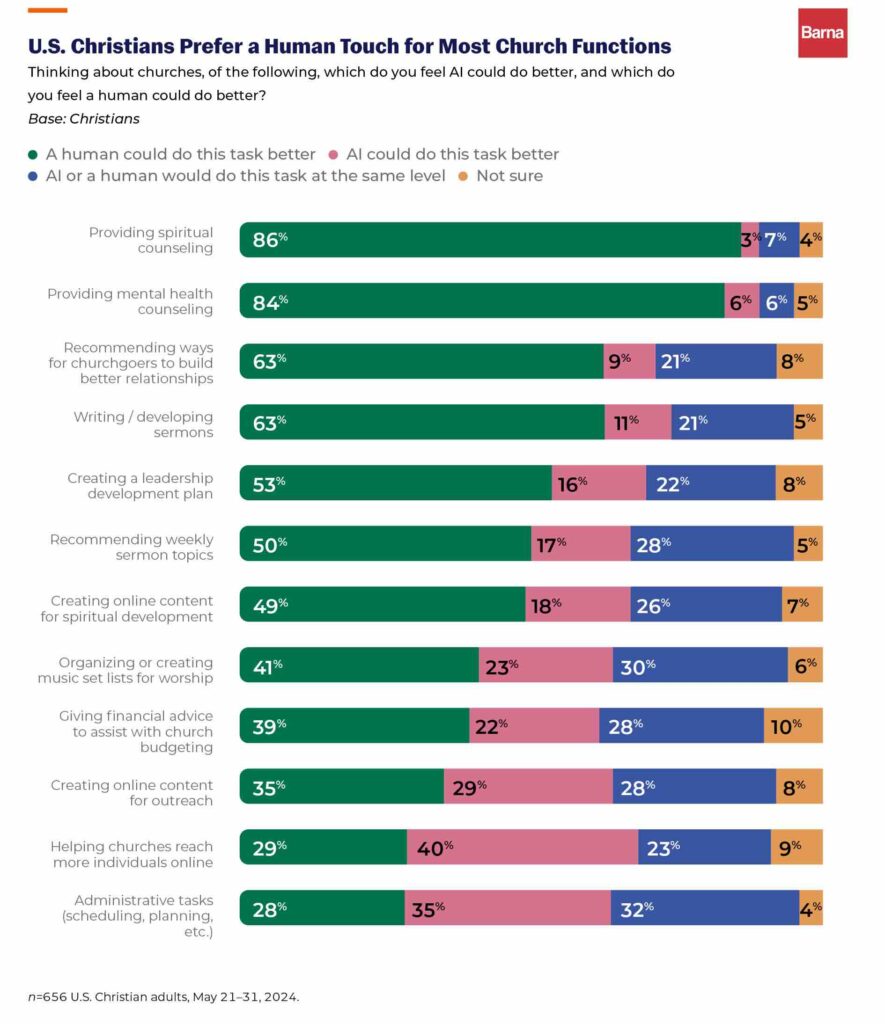
- Strong Preference for Human-Led Spiritual Counseling: According to the research, an overwhelming 86% of Christians believe that providing spiritual counseling is a task best performed by humans, not AI. Similarly, 84% feel that mental health counseling should also remain human-led. These findings indicate that the majority of Christians view these roles as too personal and spiritually significant to be delegated to AI.
- Skepticism Toward AI in Creative and Relational Areas:
Barna’s research reveals that 63% of Christians prefer humans over AI for writing and developing sermons, and 63% also believe that recommending ways for churchgoers to build better relationships should be human-led. This skepticism extends to other creative and relational tasks, such as creating leadership development plans and recommending weekly sermon topics, where 53% and 50% of Christians, respectively, favor a human touch. - Openness to AI in Administrative Roles: Despite reservations in more sensitive areas, there is greater openness to using AI for administrative tasks. For example, 40% of Christians believe that AI could be better at helping churches reach more individuals online, and 35% feel AI could excel in managing scheduling and planning tasks. These findings suggest that while Christians are cautious about AI’s role in spiritual and relational functions, they recognize its potential for improving operational efficiency.
3 Ways How Pastors Can Respond
1. Emphasizing Human-Centric Ministry:
Pastors should prioritize human involvement in areas such as spiritual counseling, sermon preparation, and relational guidance. These are core elements of ministry where the personal touch is crucial, and AI should not replace the depth of human insight and empathy.
2. Ethical Engagement:
Staying informed about AI’s capabilities and ethical implications is crucial. Pastors should engage in ongoing discussions about the appropriate use of AI within the church, ensuring that it complements rather than undermines the spiritual and relational aspects of ministry. Communities such as the AI For Church Leaders & Pastors Group is an ideal outlet to connect with peers interested in these types of issues.
3. Leveraging AI Where Appropriate:
In areas where AI can enhance efficiency, such as administrative tasks and online outreach, pastors should consider adopting these technologies. Pastors and staff should consider educational resources such as live AI skills workshops or video training platforms geared specifically for ministry and church work. This can free up valuable time for ministry staff to focus more on human-centered activities, aligning with the preferences of their congregations.
Final Thoughts
Barna’s Faith and AI research—conducted in partnership with Gloo, highlights the importance of maintaining a balance between human involvement and technological innovation in church functions. Pastors are encouraged to approach AI with discernment, leveraging it for support and accelerating their work, while ensuring that the spiritual and relational heart of the church remains human-led.
For a deeper dive into the findings, you can read the full Barna article here.