




TL;DR:
|
Gen Z churchgoers attend worship more often, on average, than any other generation in the pew.
That finding comes from Lifeway Research’s State of Discipleship study. The same study found that many of these young adults say their faith does not change how they live during the week.
That second finding should shape how your church uses technology between Sundays. If most of your tech budget went to the website, check-in, and livestream, the tools that serve people on a Tuesday may need a fresh look.
What did Lifeway Research find about Gen Z churchgoers?
Lifeway studied Protestant churchgoers by generation. In this study, Gen Z means churchgoers ages 18 to 28.
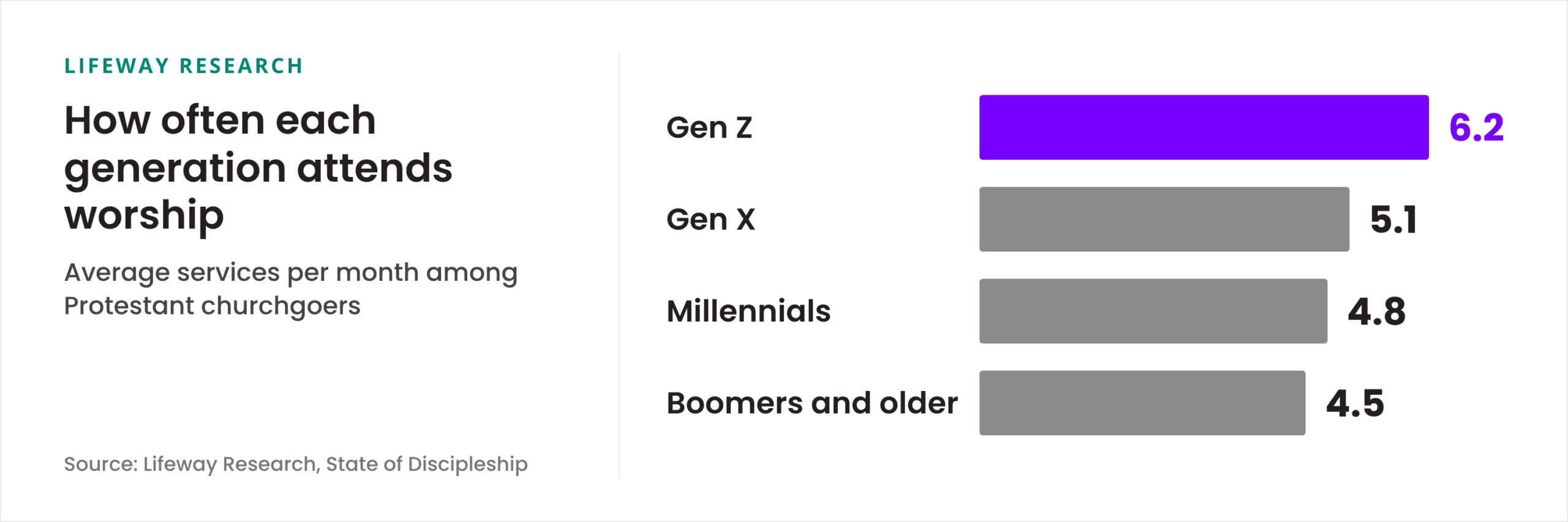
The average Gen Z churchgoer attends a worship service 6.2 times a month. Millennials average 4.8, Gen X averages 5.1, and Boomers and older average 4.5.
Lifeway adds an important detail. The median churchgoer in every generation attends 4 services a month. That means a portion of young adults attends at much higher rates, which raises the Gen Z average.
Small groups show the same pattern. Gen Z churchgoers average 5 small group meetings a month, compared to 3.7 for Millennials, 2.7 for Gen X, and 2.5 for Boomers and older. And 36% of Gen Z churchgoers say they have regular responsibilities at their church.
Gen Z churchgoers are also among the most likely to say they study the Bible every day, at 22%. And 64% say they intentionally build friendships with non-Christians so they can share Christ with them.
Where does discipleship break down for Gen Z?
The weaker numbers are about weekday life. Lifeway found that 43% of Gen Z churchgoers say reading and studying the Bible has not made a significant difference in how they live.
Lifeway reported two related findings. More than half (52%) say they usually choose their own way when it comes down to their way or God’s way. More than a third (36%) say they don’t think about God during many of their daily activities.
Lifeway also asked about doubt. Gen Z churchgoers are by far the most likely generation to say they hesitate to share doubts and spiritual struggles with Christian friends, at 53%.
Chuck Peters, director of NextGen ministries at Lifeway, named the concern directly. “The greater concern is that they are not being deeply formed,” he said.
What should discipleship tech for Gen Z do between Sundays?
Based on Lifeway’s findings, give your weekday tools two jobs.
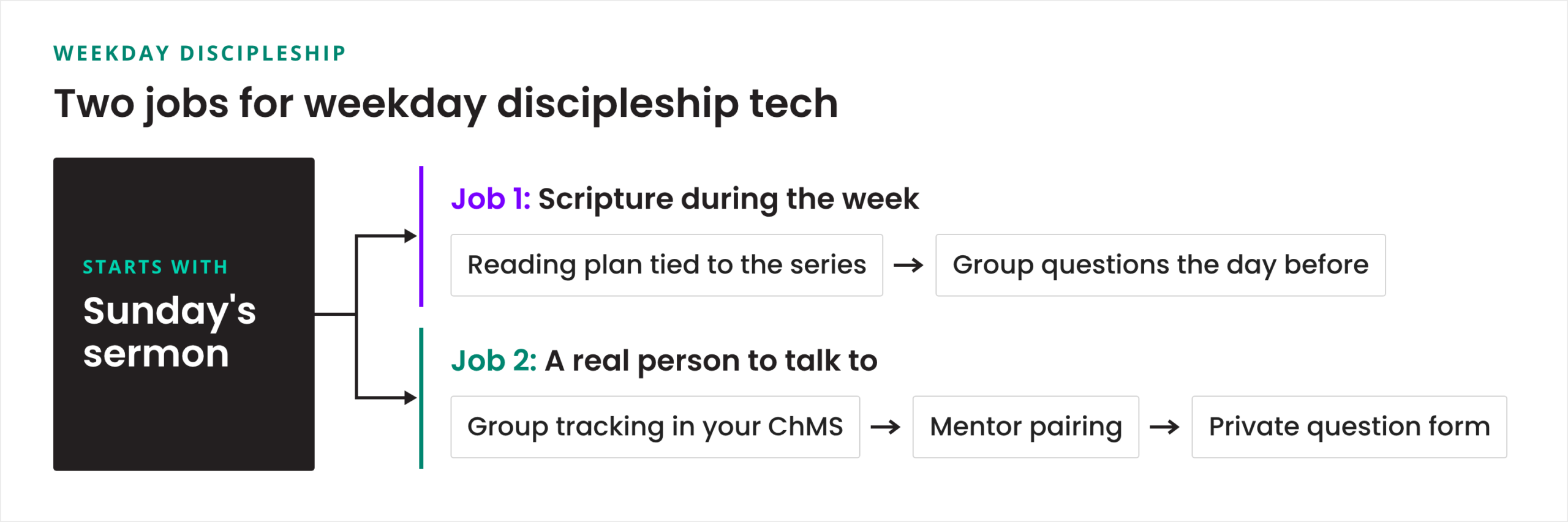
The first job is to put Scripture in front of young adults on ordinary days. A Bible reading plan tied to the sermon series does this. So do discussion questions sent to small group members the day before they meet. Keep each touchpoint short and tied to what was preached. That gives a young adult and their group something specific to talk about. Global Bible Month starts Sunday, November 1, which gives churches a good reason to launch a reading plan this fall.
The second job is to connect each young adult to a real person. Lifeway’s Chad Higgins said older generations need to build relationships and intentionally guide younger ones. Tech can help you set that up and keep track of it. A church management system can show who joined a group, who leads it, and who has not attended in a month. One simple step is to pair young adults who serve with an older volunteer on the same team. Record the pairing in your system so it does not depend on one staff member’s memory.
Plan for doubt, too. Since 53% of Gen Z churchgoers hesitate to share doubts with Christian friends, test a private way to ask hard questions. A short form on your website or app that goes straight to a pastor or trained mentor is one simple option. Make sure a real person replies within a few days.
Keep the daily tools light. Marcus Ho of Bible Note has argued that custom church apps still matter for operations, and that believers need something lighter for midweek discipleship.
How do you audit your church’s discipleship tech stack?
Set aside 30 minutes at your next staff meeting. Answer these 4 questions with your young adults in mind.
- What does a young adult in our church receive from us between Monday and Saturday?
- Does anything we send connect to Sunday’s passage?
- Can our system show which young adults are in a group and which are not?
- Where can someone ask a hard question in private, and who answers it?
If an answer is “nothing” or “we don’t know,” start there. Pick one fix and test it with your young adults through the end of the year. Then ask them what helped.
Give question 3 extra attention. Lifeway found that Gen Z churchgoers are often looking to build relationships at church. If one drops out of a group, a call within a week shows them someone noticed.
Gen Z churchgoers are giving the church more of their time, on average, than any other generation. What has helped the young adults in your church grow between Sundays?