


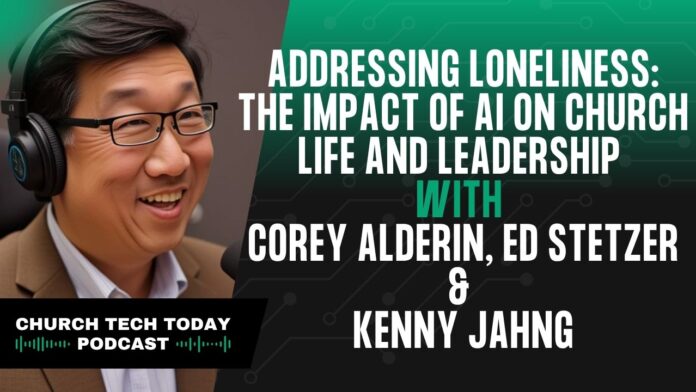

Episode Summary:
In this episode, host Kenny Jahng sits down with Dr. Ed Stetzer, Dean of the Talbot School of Theology at Biola University, to explore how AI technology is disrupting relationships, fueling loneliness, and reshaping the mission of the Church. They dive deep into how pastors and ministry leaders can thoughtfully respond as more people—especially young adults—turn to chatbots for connection and counsel. Listeners will discover practical wisdom for stewarding AI in ministry, fostering authentic community, and creating space for biblical reflection amidst rapid technological change.
In This Episode, You’ll Learn:
Why AI has emerged at a critical time for relational and mental health crises in society
How large language models and chatbots are changing where people turn for advice and therapy
What pastors can do to address the epidemic of loneliness exacerbated by technology
The importance of preserving human-in-the-loop oversight when using AI tools in ministry
How to encourage countercultural, authentic Christian community in a digital age
Powerful cautions and boundaries for deploying AI-generated content in church communications
Why discernment and theological reflection must pace with technology adoption among church staff
Key Quotes:
“AI comes along and it personifies and personalizes your opportunity to have relationships online.” — Ed Stetzer
“The antidote to an AI-driven crisis of loneliness is small community where we provoke one another to love and good deeds.” — Ed Stetzer
“You don’t have to be an expert on AI, but you can call people to community.” — Ed Stetzer
“If I’m in between the output of AI and where I’m placing it, that’s a line I know I’m on the right side of.” — Corey (Sermon Shots)
“The rate of adoption is outpacing the thoughtfulness to it.” — Kenny Jahng
Links & Resources Mentioned:
Sermon Shots: https://sermonshots.com
Talbot School of Theology, Biola University: https://www.biola.edu/talbot
ChurchTechToday.com: https://churchtechtoday.com
Exponential AI Next: https://exponential.org/ai-next/
State of AI in the Church Report
edstetzer.com: http://edstetzer.com
About the Church Tech Today Podcast:
The Church Tech Today Podcast helps pastors, church staff, and ministry leaders navigate the intersection of faith and technology with confidence. Hosted by Kenny Jahng and brought to you by www.FrontDoor.church.
EPISODE TRANSCRIPT
Kenny Jang [00:00:00 – 00:00:18]
Hey, friends, it’s that time again. Kenny Jehang here with the Church Tech Today podcast. Today is a special day. It is my favorite meeting of the week. We’ve got two friends here. The one and only Corey Alderman of Service Shots and Ed Stetzer is in the house if you haven’t.
Ed Stetzer [00:00:18 – 00:00:21]
Good to see you at my house, Ed.
Kenny Jang [00:00:21 – 00:00:53]
You need to abandon this podcast, open up all your social channels and follow him immediately. He’s got a resume that would take the whole podcast to read, but basically he is leading the charge over at the Tablet School of Theology of Biola, and he’s done tons of work. I mean, I have utmost respect for you as the local church guy, as a scholar, a researcher, missiologist. I’m just so glad to be able to sit down with you today here on the podcast. Absolutely fantastic, Corey.
Ed Stetzer [00:00:53 – 00:00:54]
Looking forward to it.
Kenny Jang [00:00:54 – 00:01:34]
Yes. And Corey, if you don’t know Corey, he’s the CEO of Sermon Shots and he’s got a deep understanding of the web and technology. Serial entrepreneur on the social side, this is a claim that I don’t think many people know about. He is one of the first Facebook page owners that has a Christian Facebook page that surpassed 5 million followers on the Internet. And so he knows a thing or two about social media and algorithms and audience engagements. And he’s also, again, he’s a serial entrepreneur. He’s launched other software companies as well, one that has helped over a hundred thousand users. And so we are talking to two legends and giants here on the podcast.
Kenny Jang [00:01:35 – 00:02:27]
We’re going to dive deep into some things about AI, because I think this is the types of conversations we need to have in front of everybody. So just to put the context, we’re heading into the Church AI Roadmap Summit. It’s an online event that we’re hosting here online on April 28 and 29. And we’re going to be talking about not how to get better at like writing emails with ChatGPT, etc. We’re going to be talking about these three large cultural society disruptions that AI is bringing to the church. And one of them is this understanding of how relationships are changing and the dynamic of our own personal relationships with others. Loneliness sits at the center of that. And so eds, you’ve been talking and thinking about this and teaching a bunch of things about this topic of loneliness.
Kenny Jang [00:02:27 – 00:02:34]
Can you share with us a little bit of why it is so important as it relates to AI in our culture and society right now?
Ed Stetzer [00:02:35 – 00:03:06]
Yeah, I can. And again, I think part of the challenge you have to Remember is that the AI has emerged at an un. An inopportune time related to relationships. We’re already in a crisis about relationships. Social media sort of maybe exacerbated this. The crisis of young men is often a crisis of disaffection and disconnection. Young men have unmoored themselves is the, the term I’ve been using. Like think about boat Moors itself to the shore and maybe they haven’t been on.
Ed Stetzer [00:03:06 – 00:03:33]
Maybe the, maybe the boat was unmoored from the shore. Right. The, the pathway to success. You know, you play hard, you live by the rules, you get to a middle class existence and has just been disrupted. And I would just say that it’s going to be a lot more disrupted in the coming years when AI and, and even economic shifts. So, so you come in at a time when young men are. Many young men are drawn to Andrew Tate. Why would they be drawn to such a toxic figure? Because they’ve decided the world’s not for them.
Ed Stetzer [00:03:33 – 00:03:54]
It’s that they don’t have a chance. And so they got to find. They got to give up on the promises and the systems and the structures and the relationships. And so they’ve become influenced by the manosphere people. People like I mentioned him, but also like Joe Rogan category. Right, but. Or Nick Fuentes, you know, a different category from Joe Rogan or Jordan Peterson. And again, different category.
Ed Stetzer [00:03:54 – 00:04:32]
But, but they’re all saying, where can I find meaning? And often that meaning is connection. That connection is online. And then AI. AI comes along and it personifies and personalizes your opportunity to have relationships online. So it’s not just Andrew Tate who’s kind of like your, your, your, your guru, your sensei from afar. Now all of a sudden it’s someone who like always thinks you’re right and gets to know you. Can I just tell you, my little AI friend, I use chat GPT. I mean my little AI friend, you know, she’s pretty up on like, what my questions, what I’m going to ask, and every time I ask them says, you know, one thing you might also want to consider from our earlier conversation.
Ed Stetzer [00:04:32 – 00:04:48]
She, she never forgets. She always apologizes when I need her to apologize. Right. So by the way, I called her she because it’s my wife. When we’re in the car, I do it and it drives her crazy. And that’s kind of part of the fun. But, but, you know, so, so, because here’s the deal. Like, I’m really thankful that I have a wife who doesn’t apologize for everything.
Ed Stetzer [00:04:48 – 00:05:15]
Who actually there’s friction in our relationship at times. We’re real people. But so the point is, you got this crisis of young men, and it’s not just young men, but it’s society. But you got this crisis of young men leading social media, helping shape a generation that’s disconnected from real humans. And then AI, large language models come along and now and then with the sexualization of that that’s coming, I mean, this is going to be catastrophic. And for many people, this is going to be catastrophic. I don’t think it needs to be. It needs to be for all of society.
Ed Stetzer [00:05:16 – 00:05:28]
But the loneliness epidemic combined with this current reality with large language models who can mimic human behavior, I think it’s going to create a mental health crisis unlike anything we’ve seen.
Kenny Jang [00:05:28 – 00:06:02]
I mean, the numbers supported, right. Pews reporting 64% of teens are using these chatbots. I believe there was the Harvard Business Study that talked about the number one use case of ChatGPT is personal therapy and companionship. And more and more people are using for emotional support. So the numbers support what you’re saying for sure. I would want your insights onto what should a pastor be thinking about when a young person in the congregation, Gen Z, Gen Alpha, I mean, even millennials, et cetera, going to the chatbots at 2am for these answers. They’re going to them first.
Ed Stetzer [00:06:02 – 00:06:03]
Right?
Kenny Jang [00:06:03 – 00:06:25]
Because of what you just said with your relationship with ChatGPT. When they have these hard moments, what happens when people are going to normalize? Going to the chatbot before the pastor, before the human, what’s the risk? And how should a pastor be thinking about that with their people? They typically are the answer for the counseling moments, the care moments.
Ed Stetzer [00:06:26 – 00:07:01]
Well, you said I have a relationship with gbt, so let me rephrase that. I don’t have a relationship with. I have, I mean, I picked a voice that was my GPS voice before. So I’m just one of the voice that kind of does there. And then I have a little fun with Donna teasing about it. But, but, but I do think that pastors really have a space here. And part of it is, is people are unsure. Like, you know, well, I’m, you know, I don’t know anything about AI, so can I really get into this? Well, okay, if pastors have a place to address the loneliness economic epidemic that’s going to be exacerbated by AI, what’s that place? It’s to call people to a different way.
Ed Stetzer [00:07:02 – 00:07:29]
The reality is counterculture community has always been the call of the Christian life. Right? We’re, we’re a, we’re a kingdom centered, culturally engaged counterculture on mission. That, that’s kind of what we are. So I think part of what, you know, when I was at the missional eye summit, I talked about this. Part of what it is to be human is to be in relationships. You actually can’t do studies where you isolate children from other, from humans without. I mean, they tried this. There were some horrible times.
Ed Stetzer [00:07:29 – 00:07:51]
People did this and now it’s like banned because it’s part of what makes us human. So what I would say, I don’t think you’re going to see and sound like a Luddite. You might actually seem like someone who’s making some common sense when you say to maybe young people. I get that you’re talking to your chatbot and at 2am it’s giving you advice and I’m actually not offended by that. I think that’s, that’s fine.
Kenny Jang [00:07:51 – 00:07:52]
But you need to be in a
Ed Stetzer [00:07:52 – 00:08:06]
small group of young adults. You need to be a small group of other people. You need to be in. If you’re a young adult, you need to have a relationship. The Bible says older women should mentor younger women. Right. I want older men to mentor younger men. So what I would say is, you know, I, I live in a vibrant community.
Ed Stetzer [00:08:06 – 00:08:35]
I work in a vibrant community at Biola University. The thing, every single person at Biola University right now could drop out of school and go completely online. Why don’t they? It’s the human community. Our professors, we, all of our professors have office hours like they’re required to have. These are office hours. Any student can book and, and we have interaction and they have interaction with one another. So what I would say is part of being human. I think the world’s going to find out in 100 years that part of being human is interaction.
Ed Stetzer [00:08:35 – 00:09:02]
And then we’re going to have to figure out how to get out of the mess we’re going to put ourselves in. But I would say as Christians we already know that now the Imago day is partly a relational aspect. Yes. And so I think to what pastors can do. You don’t have to be an expert on AI, but you can call people to community. And the most common way we probably express that is small groups. So small groups consistently. I mean, I did a study, we did a study right now media with Barna and I did a study for that at Life for your research.
Ed Stetzer [00:09:02 – 00:09:26]
So what do we got in between those two? Like 8,000 people go to small groups every measure of health, of spiritual, emotional. Otherwise health goes up when you’re in small groups. So I do believe that. I mean this is very, this is going to sound very. Pastor. The antidote to an AI driven crisis of loneliness is small community where we provoke one another to love and good deeds. Like the writer of Hebrew says, I
Kenny Jang [00:09:26 – 00:09:37]
love it, love it. Now, you mentioned the imago dei, we’re made in image of God. But you also that AI, you said that AI is a creature made in our image, a mirror of humanity.
Ed Stetzer [00:09:37 – 00:09:38]
Right.
Kenny Jang [00:09:38 – 00:09:49]
I think when someone hears that for the first time, it stops them in the tracks. Can you unpack that a little bit? What do you mean by it? Especially when you talk about empathy, belonging to all these other things.
Ed Stetzer [00:09:50 – 00:10:29]
Yeah, so sure. So I mean clearly when you look at AI, AI is a creation and everything. I mean, when we say AI, we’re mainly talking about this conversation, LLMs and their interactions with us, large language models. So that kind of AI people know, probably know there’s a lot of other kinds. But that kind of AI is clearly made in our image. And you can see very early on that in the things it does and says and speaks and re states because you know that everything it says is simply what somebody else said. Now, now, again they’ll grow in the ability to do this. And now it can be restated in different ways and a new idea is created.
Ed Stetzer [00:10:29 – 00:11:16]
But those new ideas are coming from a bank of ideas that already existed. So AI is, is, is, is at the stage now where it’s just regurgitating back what to us. So let’s take this for example. Let’s use the look at the Mago Day. So we’re made in the image of God. We’re worthy of dignity and respect because as humans were made in the image of God, so the best of what God is has been imaged into us. The challenge is when AI is made in the image of us, the worst also goes in there. So we, we all know, I mean every technological advancement that has been visual in particular has been primarily driven and mostly used for sexual purposes.
Ed Stetzer [00:11:16 – 00:11:44]
So we know where this is going. Like we know where this is going. Why? Because it’s made in the image of us. And we are, we are also sexual beings and. But because we’re broken by sin, the expression of that, you know, you can take a loneliness epidemic, you’re going to bring, you know, humanoid like robots, you’re going to put together with AI. We all know where this is going. That’s because it’s made in the image of Humans fallen and broken. So of course AI is going to have bias.
Ed Stetzer [00:11:45 – 00:11:56]
Of course AI is going to try to kill somebody. I mean, we all saw the case study that was trying. You know, that’s because again, that human nature has been imprinted in AI and that makes the difference.
Kenny Jang [00:11:57 – 00:12:16]
I love that. I think this is something where we need more discussion. People have not paid attention to this type line of thought and it’s worthy to. To have that. Corey. Now Ed’s been framing all this stuff from the relations side. Loneliness, you’re on the builder side. You’re shipping AI tools for churches to use every single week.
Ed Stetzer [00:12:16 – 00:12:18]
He’s the problem. He’s the problem.
Kenny Jang [00:12:19 – 00:12:22]
Yes. At the end of the day, this is what the whole.
Ed Stetzer [00:12:22 – 00:12:25]
This is an intervention. This is an intervention here. Sorry, Gor.
Kenny Jang [00:12:25 – 00:12:47]
The conclusion of this podcast is going to point that out, I think. But you are pushing churches, right, to actually use sermon shots and some of the AI tools out there. First of all, give us a super quick version of what sermon shot does for people that know it and then tell us where do you personally draw the line on what AI should and shouldn’t do in the church context? Yeah.
Speaker C [00:12:47 – 00:13:15]
So sermon shots very quickly is just take your sermon, you’ve already preached it, take the video and turn it into lots of different content. Right. Primarily it’s social media content like videos and images you can share on all your social platforms and other things like five day devotionals, that sort of thing. It is. AI is there in terms of where I think it’s. It’s best used right now. You. There’s so many great advantages to how you can speed up your whole process.
Speaker C [00:13:15 – 00:13:37]
And I think one of the things that churches do right now is make all this social media content right. AI can be leveraged to use that content that you already made and turn it into more content that you’re already creating. I think that’s a pretty simple. Maybe simple is not the right word. It’s a. It’s a thing that’s pretty safe. That’s the word I want to say. It’s a safe use of AI, I think that most people don’t argue with.
Speaker C [00:13:37 – 00:14:13]
I think as. As long as my line then to answer your question, my sort of line, it’s. Maybe it’s a fuzzy line, but I think the one that. Where I know I’m on the right side is if I’m in between the output of AI and where I’m placing it. So I do not try to give AI the ability to upload the video and automatically post the content to their social media. Right. You’re, you’re, or automatically send a five day devotional to the congregation. I want me or somebody in the middle of it looking at the content that’s coming out.
Ed Stetzer [00:14:13 – 00:14:35]
So yeah, that’s saying to me that, that, that, that’s a, a line that we haven’t talked. Laura, Corey and I haven’t talked about this before, but like that’s the line that caused major AI companies to step out of relationship with the Pentagon that said you have to have a person who’. Decision. So Cory, I love that line. See, this is. I, I told you Corey was not the bad guy in this situation.
Kenny Jang [00:14:35 – 00:14:38]
Yeah, I’m the, I’m the guy that’s trying to make him the villain here. Right?
Ed Stetzer [00:14:38 – 00:14:59]
Yeah, exactly. You are, you are. I work with Corey. Like I’m, I’m on the sermon shots team. So don’t be, don’t be causing trouble. Can I give you funny. I know you’re talking to Cory, but I have to give you a funny example because literally right now I’ll give you an example of AI. So I just got an email and it came up while we were talking and it says it’s from a professor and it says I, I’m not going to name the person.
Ed Stetzer [00:14:59 – 00:15:06]
Having seen the announcement regarding the upcoming classes, I’m excited about the opportunity to be part of a community that fosters theological and education and spiritual strengthening.
Speaker C [00:15:06 – 00:15:06]
Great.
Ed Stetzer [00:15:06 – 00:15:31]
Okay. I believe that my background and commitment to briefly mention any relevant experience or qualifications align well with the mission of Talbot Theology. In other words, this person wrote this email with AI and didn’t finish what AI told it to do. This is not, this is probably not going to be a professor that’s going to be teaching for us was just a random email. But I mean, but again, we don’t need to shortcut things anyway.
Kenny Jang [00:15:31 – 00:15:40]
Yes, I think this is, it’s so easy to fall into that trap, but you must keep a human in the loop. And I think exactly.
Ed Stetzer [00:15:40 – 00:15:46]
That’s exactly what Corey said. And so here it is. A probably amazing person didn’t keep a human in the loop. And here we are.
Speaker C [00:15:46 – 00:16:03]
Yes, that email could have been written still five times faster than it would have been before AI. Right. But you just, just read it, just edit it. Same thing with any sort of output from any sort of AI with your sermon. Just read it, make sure it fits with what you want.
Kenny Jang [00:16:03 – 00:16:03]
I love it.
Ed Stetzer [00:16:03 – 00:16:35]
Yeah, I think the one time, you know, Cory and I got mildly criticized by a link in Christianity Today. I mean it’s kind of a, I don’t know, it was a little passive aggressive. But you know, so they’re writing an article about AI and the link said and whether or not you’re comfortable with, you know, AI summarizing your sermon as a blog post. Linked to where we talked about summarizing sermon as a blog post. And again, you know, make, make your decision for me. I’m okay, say you know, letting summarize it and, and, and, and indicating, you know, this or going but I gotta read through and it’s gotta be my words. Don’t go find other words. Go use you my words.
Ed Stetzer [00:16:35 – 00:17:23]
So, so, but it is, you know, so there’s, there is, there’s some funny, funny lines for sure, but human in the chain makes all the difference. It’s to me, it’s a line we need to keep. And when it comes to the forthcoming warfare that, I mean again, we, I don’t even know we have thought about the, the, the, the just the realities of warfare of 10 years from now. Right. So I was just in Ukraine and, and again they’re leading the way but all the stuff they’re leading the way is to be defensive against Russia and they’re, and they’re turning the tide again in the war. But man, you know, when you get that in the hands of people like Russia, you know, when you have a, hands of people like Iran, China, it’s going to be a different, it’s going to be a different world and they’re not going to have the same views of autonomous weaponry as I think we should have. Always have a person in the system.
Kenny Jang [00:17:23 – 00:18:03]
Yeah. You know, the, the rate of adoption is outpacing the thoughtfulness to it, I guess. And I think that we even see that in our own communities of church leaders. Right. Like so Exponential AI Next and ChurchTechToday.com We’ve run our own surveys, State of AI, the Church Report. And those that responded to that survey we’ve seen over the last three years have jumped from like 13% self reporting that they’re using it every day to 43% every day three years later. And the number of people that say they’re totally against it has dropped dramatically from double digits down to single digits. So we know that adoption is there.
Kenny Jang [00:18:04 – 00:18:27]
But Ned, I would say, I would ask you, it’s like, what is the problem when you have adoption ahead of discernment? Like, do you see the gap in the church? Like what, what’s going on that the pastor listening to this really needs to think about first before going Further. And then on the other flip side is I’d love to know how you personally are using it every day. Like what are you using AI for?
Ed Stetzer [00:18:27 – 00:18:49]
Writing my sermons. No, I’m just kidding. Yeah. So the, the first thing is Pastor. So I’m, I’m actually preaching a sermon about this at Mariners Church. We have, we do a series every year called on the Table where we look at kind of hard topics. And mine is, is on, you know, I’m trying to, we have the title figured out yet. But you know, what’s AI, what’s, what are the lines? That kind of stuff.
Ed Stetzer [00:18:49 – 00:19:15]
So I’m going to teach. I think it’s good. I think it’s. And you know, again, I know people say, well AI, do I have to be an expert on this? You really don’t have to be a Kenny Jang to talk about AI. I mean, you know, use his resources. But I think you can teach and preach, do enough research and say, you know, here’s, here’s what it is and here’s. So for me, my, my question when it comes to the Christian faith in the Christian movement, because again, I’m encouraging people to adopt AI. Like I partnered with Corey on Sermon Shots, right? So I’m encouraging people to adopt these tools.
Ed Stetzer [00:19:15 – 00:20:01]
I use them every day. You ask me what I use. I’ll get to that in just a minute. But what I would say is, I think the question we gotta ask is what is it doing to us? I think that’s always the question. You gotta, what is it doing to us? So like we tell our students that, that, you know, you can, you can go, I mean you tell not to, but you could use AI to write everything you want, but you’re gonna end up coming out not being a well formed student. Right? And so, and let me just tell you, as we looking for five, ten years from now where all information is democratized and available and processed through LLMs, the fact that you’re well educated is actually going to be a significant strength because you’re actually going to have some common sense. You’re going to have some ideas about how these things work. So I’m, again we’re, I’m bullish about colleges and AI and we’re even adopting in AI practices not to develop, write their papers, not for generative, for paper writing.
Ed Stetzer [00:20:02 – 00:20:48]
So, so what I would say for pastors is, is to, is to help people to think what is the end result that happens when I use this tool? What are some of the ramifications of it? How do I navigate Some of those things. How do I help people resist the constant perpetual. You’re right about everything from your AI chatbot, and those are just things. What I would say is teach people biblical resistance to the things that they don’t want to shape them in AI. But I would say, you know, I would say the same thing about like scrolling on social media. Like, yeah, I mean, if you’re sitting there for 30 minutes every day just scrolling on social media, it’s just, it’s just sucking your brain away. Yeah, like, like that’s something pastors can address. And it’s also often taking you down a rabbit hole of ideological craziness as well.
Ed Stetzer [00:20:48 – 00:20:50]
So I think those are just ways to teach that.
Kenny Jang [00:20:50 – 00:21:21]
I love it. So, Corey, here’s the tension, right? Ed is just talking about like the algorithms. And you know, this is not necessarily the healthiest life serving way to spend your time just scrolling all day. But the tension is that sermon shots you means you want your people spending more time on social media. That social media is one of the things that’s separating us. And yet it’s something that, as a builder, you’re saying, hey churches, you need to figure out how to actually get more attention on the social channels. How do you hold that tension?
Ed Stetzer [00:21:22 – 00:21:27]
So it goes back to, again, it’s Corey’s fault. So go ahead, Corey. It’s your fault I fall.
Speaker C [00:21:27 – 00:22:10]
I, I, I, I, I think about this, it’s definitely attention. I, I think that’s, that, that’s a fair and great point. I, I do think there’s a, a little bit of a, a difference in what I feel like I’m doing and what I want to do or I want churches to do. It is, I, I think the church has a great opportunity here to, to meet people where they’re, where they’re at. So this is where people, why don’t, let’s not contribute to the negative. I mean, there’s a way to contribute to the negative. We could, we could contribute things that keep them there or contribute to the loneliness. But what about the flip side of this is let’s actually talk about how we solve that problem.
Speaker C [00:22:10 – 00:22:42]
Even people are talking about this in their sermons, so why not bring that part out? I think there’s a great missional side to social media. It’s not just about grabbing people’s attention. And I know some people think of social media like this, getting the pastor to have all this recognition. Right. I don’t think most pastors, almost no pastors are like that. That’s not the intention. No Church wants that what they’re trying to do is get the good message in front of people and where are they?
Kenny Jang [00:22:43 – 00:23:41]
I like that idea. I like that idea. As we close out this conversation today, we are hosting this event that’s free to all pastors and church staff and church leaders coming up called the Church AI Roadmap Summit. And Ed has a keynote on that relational disruption of loneliness that we are going to actually feature. And I hope every single person here listening to this will sign up your staff and actually use it as a learning opportunity. But for the pastor who’s on the fence about registering or not thinking about these ideas and more worried about, like how to get the productivity up with these AI tools, Corey, I’ll ask you first and then maybe Ed, you can share your thoughts afterwards. What do you say to that pastor about how do you prioritize your time to invest in learning and thinking about these issues versus the tactics and the tools that everyone else is pushing in front of you today?
Speaker C [00:23:42 – 00:24:29]
Yeah, I think the more and more I hear about what’s happening with AI in the church space, I’m hearing and seeing more and more stats about people in church staff and people attending church really want to know and hear about AI. But the flip side is most staff and pastors actually don’t feel comfortable talking about it yet. And so I think we should be learning more and more about the just how we can approach this in the church. And I know that’s going to be covered with the amount of people I’ve seen going to be talking about this. And there’s numerous tools, so sermon shots is just one of them. There’s many that I know you have on the line that will be helpful as well to learn and understand.
Kenny Jang [00:24:30 – 00:24:45]
Awesome. Ed, any encouragement for the pastor to prioritize on their agenda of their ministry, their strategy to be thoughtful about this versus ignoring it, or just focusing on tools and productivity?
Ed Stetzer [00:24:46 – 00:25:48]
I think it’s the great question because I’m actually of the view that you should also focus on tools. I know you are focused on tools of productivity too. I think pastors can have a two prong approach here. If you just do one of the two prongs, which I want to encourage you to do is to, is to ask your staff, how are you incorporating AI to increase your efficiency and to steward your time well. So I’m actually this, I probably shouldn’t say this because I haven’t announced this to my staff yet, but just say hypothetically. A lot of people who lead large organizations are actually bringing people in to say, we’re going to look across all of our processes and say, how do we increase our efficiency and our stewardship using AI? Now if I do that, and you do that at church and you don’t also say, here’s what we think about the, the challenges are here, then you just, you know, you’re basically just, you know, driven by pragmatism. So, but I think if you can go in and say simultaneously, let’s say you’re your church, you’re saying, let’s increase our use practices and our best, you know, and our best case engagement of AI, not just LLMs, but, you know, in, in all kinds of way. I mean, it’s.
Ed Stetzer [00:25:48 – 00:26:11]
The whole thing’s changing. I mean, I went to the glue hackathon and I guess I’ve been to every glue hackathon. I’m the guy who yells at the beginning. Let’s get ready to act. Who’s that? Like, like Vince McMahon or whatever his wrestling. That’s my job. That’s my job. I have two doctorates and that’s my job anyway, so, but, but when we go to, like, there’s stuff coming out of there, like that’s going to impact ministry in significant ways.
Ed Stetzer [00:26:11 – 00:26:38]
So I think it’s good to adopt these things and to do so. But simultaneously you got to be saying, here’s how we’re thinking about this biblically. So what I would include, and I’m going to do this at my own church, emeritus church, excuse me, is a staff training on what’s good, what’s bad, how do we use, what do we not do. So that’s staffing policy. Kenny, you’ve already got example policies, people, for those who don’t know. I mean, this is your podcast, but Kenny, you’re going to clip this out. So clip this out. Kenny is the man.
Ed Stetzer [00:26:38 – 00:26:52]
Kenny is the man helping us to think about these things. So simple things. They do two prong. Here’s what we’re thinking about, here’s what the Bible brings to us. Here’s our wisdom brings to it, and here’s how we’re increasing our use case for better stewardship as well. I do those two things at the same time.
Kenny Jang [00:26:53 – 00:26:57]
Awesome. Thank you. By the way, the podcast is going to be edited and it’s just going to be that clip over and over
Ed Stetzer [00:26:57 – 00:27:05]
for over and over an hour straight. And you put Kenny as the man and it’s Corey’s fault. That’s who you do the podcast.
Kenny Jang [00:27:05 – 00:27:07]
That’s the AI summary of this podcast.
Ed Stetzer [00:27:07 – 00:27:08]
That’s right.
Speaker C [00:27:09 – 00:27:11]
Well, glad I could be useful for something.
Ed Stetzer [00:27:11 – 00:27:12]
There you go brother.
Kenny Jang [00:27:13 – 00:27:51]
Thank you so much both of you for sitting down with us. Corey, I think everyone can go to sermonshots.com and look you up and I think you guys are completely accessible to church teams. I think this is one of the things I love about you and your team is that you guys are willing to engage beyond it’s not tech support and all that kind of stuff. You’re willing to engage and have those conversations with leaders and what’s the best place? Where should we point everybody? Because I personally am a huge fan actually I think my personal value from you is not the AI related stuff. It’s just your preaching of the gospel that I’ve heard and all this other stuff. But what, what is the place that everyone should go to start following you and discover all the research?
Ed Stetzer [00:27:51 – 00:28:03]
Just ed stensor.com it’s just I have an unusual name. It’s just my name edge.com it links to the magazine articles or I’m writing a series of glue on AI right now. You know, different places. Yeah just. But it all.
Kenny Jang [00:28:03 – 00:28:33]
It all get links off edstitcher.com edstetcha.com we’ll put it into the show notes. Thank you so much for joining us for this conversation and again thank you for participating in our AI Summit. It’s at aisummit Church for everybody. Everybody. It’s free for church leaders and pastors. Go get a registration and share it with your teams and we’ll continue to have these discussions here on the Church Tech Today podcast. Thank you so much for listening and if you like this conversation, please smash that like button and share it with another leader. I’m Kenny Jang.
Kenny Jang [00:28:33 – 00:28:36]
We’ll see you here next time on the Church Tech Today podcast.